
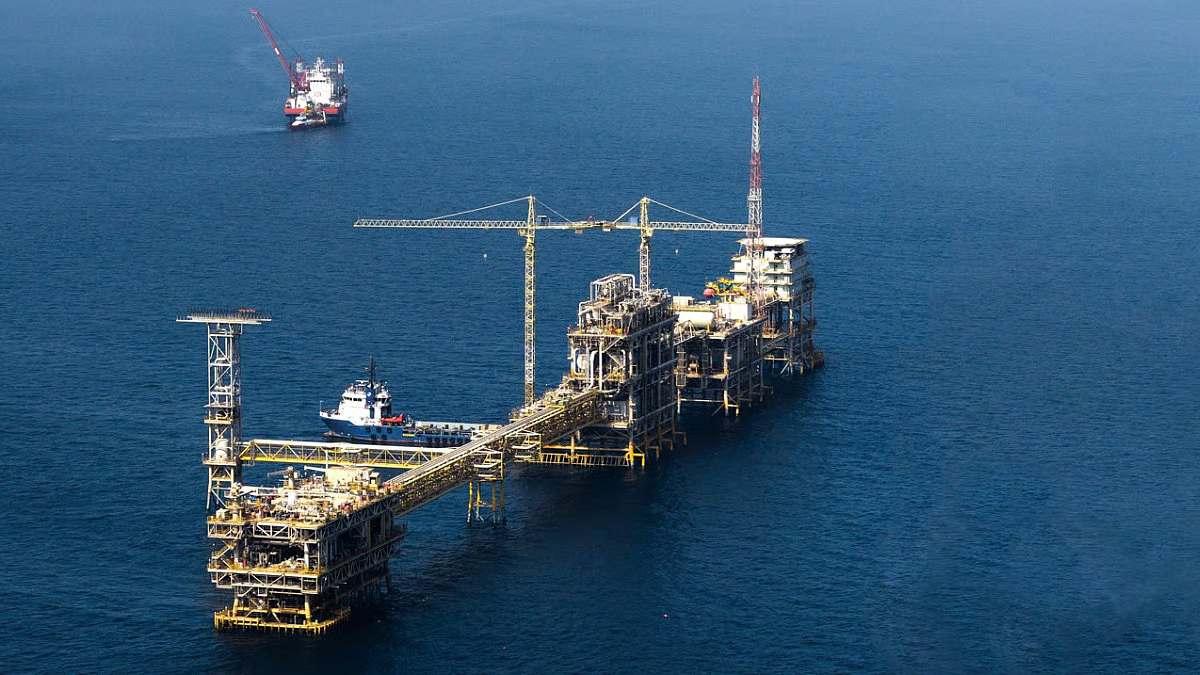
Saudi Arabia oil output cut by 2 million barrels per day amid the Iran conflict has stunned global markets. Sources report the kingdom now produces around 8 million bpd, down from February levels exceeding 10 million bpd. The reduction follows the shutdown of the Safaniya and Zuluf offshore fields.
Meanwhile, regional tensions have forced Gulf producers to halt large volumes of oil due to blockages at the Strait of Hormuz. The narrow waterway, located between Iran and Oman, has faced disruptions since U.S. and Israeli airstrikes began on February 28. As a result, Middle East oil supply has tightened significantly.
Furthermore, Saudi Arabia is rerouting some oil to Yanbu on the Red Sea coast to bypass the Strait of Hormuz. This pipeline primarily carries light crude, while Safaniya and Zuluf produce mostly heavy and medium-heavy crude. Consequently, overall production remains constrained despite the rerouting efforts.
Prior to the conflict, Saudi Arabia had increased output in February as a contingency against potential disruptions from the Iran war. At that time, production reached approximately 10.882 million bpd, with 10.111 million bpd supplied to global markets. The new cuts represent a sharp reversal from this peak.
In addition, the International Energy Agency reports that Gulf countries including Iraq, Qatar, Kuwait, the United Arab Emirates, and Saudi Arabia collectively reduced oil production by at least 10 million bpd. Without a rapid reopening of shipping channels, further supply losses are expected.
Analysts warn that Saudi Arabia oil output cut could push prices higher, with Iran predicting oil may reach $200 per barrel if tensions persist. Market watchers are closely monitoring global oil flows and inventories as these reductions continue to influence energy security.
Moreover, the cuts underscore the vulnerability of global oil markets to geopolitical events. Investors and energy traders are assessing risk levels, while governments consider contingency plans to mitigate potential supply shocks.
Ultimately, Saudi Arabia oil output cut highlights the region’s strategic importance for global energy stability. The kingdom’s decisions directly impact pricing, trade flows, and investor confidence, emphasizing the delicate balance between security and energy supply.
