
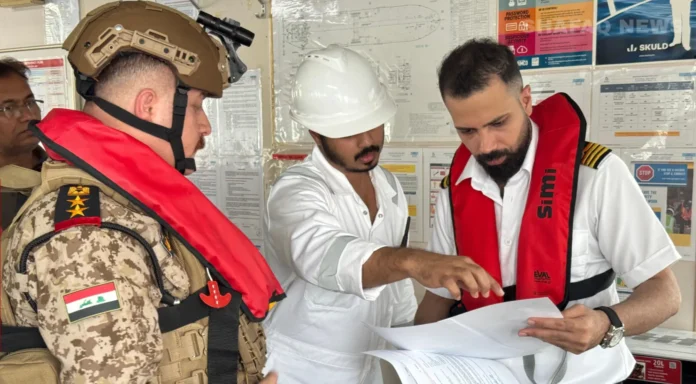
The Iraq maritime security alert intensified after several incidents targeted oil tankers near southern Iraq. Authorities quickly increased naval readiness to protect territorial waters and vital shipping routes. Moreover, officials stressed that maritime security plays a crucial role in safeguarding the country’s economy.
Commanders from the Iraqi Navy ordered forces to raise operational preparedness across strategic waters. Consequently, naval units expanded patrol operations and strengthened monitoring along major maritime corridors. These measures aim to secure shipping lanes that transport Iraqi oil to international markets.
Military leaders explained that protecting maritime routes remains essential for national stability. Iraq relies heavily on exports through southern ports to support its economy. Therefore, authorities treat oil terminals and commercial harbors as critical infrastructure that requires constant protection.
The decision followed several maritime security incidents reported earlier this month near Basra. In one incident, the tanker SAFESEA VISHNU, registered under the Marshall Islands flag, came under attack while operating inside Iraqi waters. Shortly afterward, another vessel named ZEFYROS, which sails under the Malta flag, also faced a similar security incident in the same region.
Authorities also reported damage to another crude oil tanker anchored near Khor al-Zubair Port. The vessel carried the Bahamas flag and likely suffered structural damage following an explosion. Although investigations continue, officials believe the incident highlights growing security risks around vital maritime infrastructure.
Because of these events, naval commanders intensified surveillance and monitoring across Iraqi territorial waters. Ships and patrol units now maintain a higher readiness level while tracking maritime activity near commercial ports. In addition, security teams continue evaluating potential threats to shipping routes connected to Iraq’s oil export network.
Government officials also stressed the importance of keeping international shipping lanes away from regional conflicts. Maritime routes support global trade and energy transportation. Therefore, attacks on vessels could endanger civilian crews and disrupt international markets.
Authorities further warned that incidents targeting shipping lanes carry serious economic consequences. Iraq exports a large portion of its crude oil through southern ports. Consequently, any disruption to these routes could affect millions of people who depend on energy trade and economic stability.
Meanwhile, security officials continue coordinating with maritime authorities and port operators. Their cooperation helps strengthen defensive measures and ensures safer navigation for commercial vessels. Through these efforts, the Iraq maritime security alert seeks to maintain stable maritime operations despite regional tensions.
Military leaders also emphasized that protecting maritime infrastructure remains a top national priority. Oil terminals, commercial harbors, and shipping routes form the backbone of Iraq’s trade network. Therefore, authorities continue strengthening defensive measures across southern waters.
As tensions persist across regional waters, Iraqi naval forces remain on heightened alert. Continuous patrols and monitoring operations aim to prevent further incidents near strategic ports. Because of these measures, the Iraq maritime security alert now represents a key effort to secure Iraq’s maritime trade and protect vital energy exports.
