
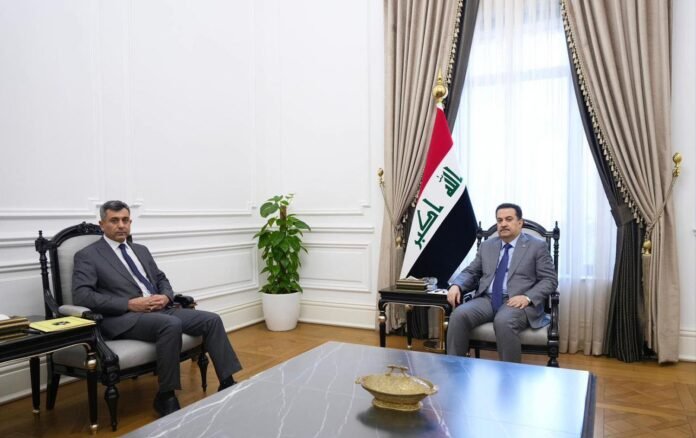
A Yazidi lawmaker confirmed he discussed Yazidi fighters’ integration with Iraq’s Prime Minister Mohammed Shia al-Sudani. Murad Ismael, a U.S.-based activist turned MP, said the meeting focused on integrating Yazidis who took up arms after 2014 into Iraq’s official security institutions. The talks emphasized alignment with the Constitution and law while limiting arms to state forces and promoting Sinjar stability.
Ismael has been advocating for the integration of all-Yazidi armed formations, including the Yazidi-led Shingal Resistance Units (YBS), into Iraq’s security structures in recent weeks. He praised Sudani’s efforts to address these issues in ways that serve Iraq’s national interest, reinforce sovereignty, and ensure long-term security for the Yazidi community.
Sudani’s office did not explicitly mention Yazidi fighters in its statement but highlighted the broader agenda of the meeting. Officials said discussions covered service delivery, social and economic development, displaced residents’ return, and rebuilding Shingal district in Nineveh province. The government reaffirmed its commitment to all Iraqis, particularly communities targeted by ISIS, ensuring safe and stable resettlement.
The presence of armed groups in Shingal has drawn regional attention, particularly from neighboring Turkey. In January, Turkish Foreign Minister Hakan Fidan indicated that areas including Shingal, Makhmour, and Mount Qandil would “witness changes soon” following developments in northeast Syria. He suggested that Iraq would face a similar “transition phase” after Syria’s developments.
Fidan’s remarks caused tensions between Baghdad and Ankara, prompting Iraq’s foreign ministry to summon the Turkish ambassador. Ankara later clarified that the statements were misinterpreted. Shingal remains the home of the YBS, an all-Yazidi force widely considered a PKK-linked group in Iraq. Meanwhile, Qandil, near the Iraq-Iran-Turkey border, continues as the PKK’s main headquarters.
The discussions on Yazidi fighters integration highlight ongoing efforts to incorporate local armed groups into state institutions. Observers say the initiative could strengthen Iraq’s security, limit unauthorized arms, and ensure long-term stability in Sinjar. Lawmakers and regional authorities continue to emphasize legal, constitutional frameworks while addressing security concerns in northern Iraq.
