
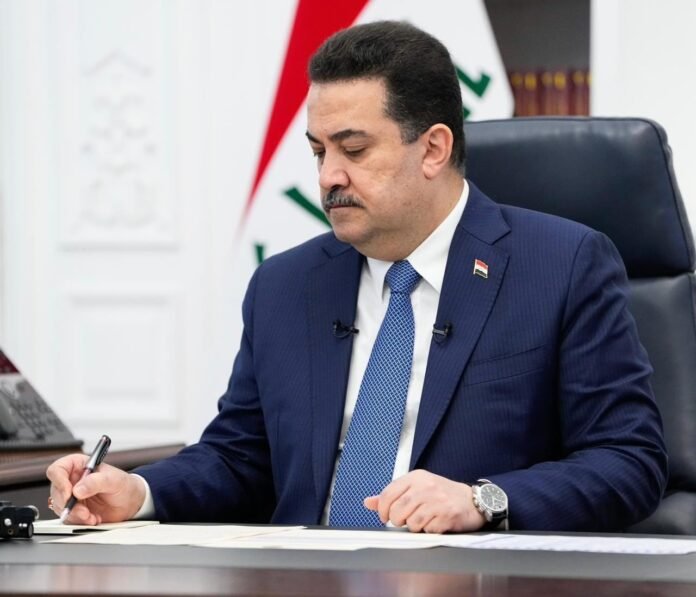
Iraq’s Prime Minister Mohammed Shia al-Sudani announced government spending cuts by terminating multiple advisors’ contracts. Authorities explained the measure aims to reduce expenditures and reorganize departments, improving overall government performance nationwide effectively.
The prime minister’s office highlighted that government cuts include consolidating units, merging overlapping divisions, and streamlining internal operations strategically. Officials said affected advisors previously managed critical files with an overall project completion rate of eighty-eight percent effectively.
Government officials expressed appreciation for the contributions of advisors and staff involved in implementing programs across ministries. Authorities emphasized that government spending cuts do not diminish recognition for personnel achievements, praising their dedication and professionalism sincerely.
Sudani’s administration seeks reforms to create a diversified economy less reliant on volatile oil revenues in Iraq. Initiatives include automated tax collection, anti-evasion measures, updated pricing for public services, and digitalized customs procedures nationwide gradually.
Financial advisor Mazhar Mohammed Salih explained that government spending cuts support building a sustainable revenue base independent of oil price fluctuations. The plan aims to strengthen Iraq’s financial stability while fostering long-term economic growth strategically.
Analysts note that Iraq remains highly dependent on oil revenues, making fiscal reform a critical priority for national stability. The government stresses that government spending cuts and efficiency measures will reduce vulnerability to oil market volatility effectively.
In 2023, Iraq approved a three-year budget for 2023, 2024, and 2025 totaling approximately one hundred fifty-two billion dollars. The budget assumes oil prices at seventy dollars per barrel, highlighting the risks if prices fall below the threshold.
Sudani’s office reiterated that government spending complement broader reform strategies focusing on transparency, accountability, and public service optimization across state institutions. Officials emphasized the reforms aim to benefit citizens while preserving fiscal sustainability.
Observers expect the termination of advisors to signal a larger commitment to structural reform, cost reduction, and economic modernization in Iraq. Authorities encourage all ministries to adopt efficiency practices aligned with national fiscal goals immediately.
Ultimately, government spending cuts represent a proactive effort by the Iraqi government to maintain stability, enhance performance, and reduce dependency on volatile oil revenues nationwide.
