
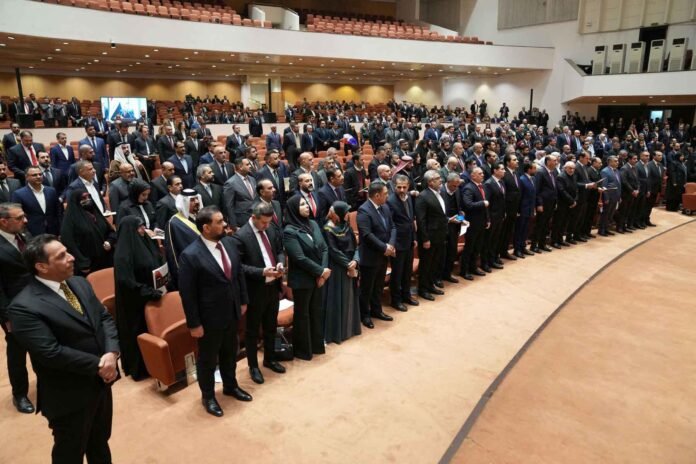
Iraqi lawmakers postponed a critical presidential election on Tuesday, this Kurdish dispute delays the nation’s fragile government formation process. Therefore, the vote was delayed at the request of two major Kurdish parties. The Kurdistan Democratic Party and Patriotic Union of Kurdistan requested more time. They need further consultations to agree on one unified candidate.
A historic understanding traditionally guides this political process, the largely ceremonial presidency always goes to a Kurdish politician. Moreover, the Patriotic Union of Kurdistan typically holds the federal presidency. The Kurdistan Democratic Party leads the semi-autonomous Kurdish region. This delicate balance now faces a significant internal challenge.
The Kurdistan Democratic Party nominated its own candidate this time, Foreign Minister Fuad Hussein is their choice for the presidency. However, this move breaks the long-standing informal agreement between parties. Consequently, this Kurdish dispute delays the entire constitutional timeline. The parliament cannot proceed without a consensus nominee.
Whoever finally emerges must still secure broader parliamentary approval, Shia and Sunni political blocs must also endorse the Kurdish candidate. Furthermore, this requirement reflects Iraq’s complex sectarian power-sharing system. The prime minister role is reserved for a Shia Arab politician. The parliament speaker position goes to a Sunni Arab member.
The presidential election is an essential step for government formation. The new president must appoint a prime minister within fifteen days. Furthermore, former Prime Minister Nouri al-Maliki is the expected appointee. The Shia Coordination Framework alliance already endorsed him. His potential return deeply concerns the United States government.
This current Kurdish dispute delays more than just a vote. It stalls the entire political process during a tense period. International actors closely watch the unfolding situation. U.S. Secretary of State Marco Rubio recently issued a warning. He cautioned against forming a pro-Iranian government in Iraq.
The ongoing impasse highlights Iraq’s persistent governance challenges. Sectarian and ethnic quotas often complicate decision-making. However, negotiations will continue behind the scenes urgently. All parties recognize the cost of prolonged political instability. The nation requires a functioning government to address pressing issues.
Observers now await a new election date from parliament. The two Kurdish parties must resolve their disagreement quickly. Their compromise will shape Iraq’s political direction for years. This foundational Kurdish dispute delays critical state functions. The delay ultimately tests the resilience of Iraq’s power-sharing model.
