
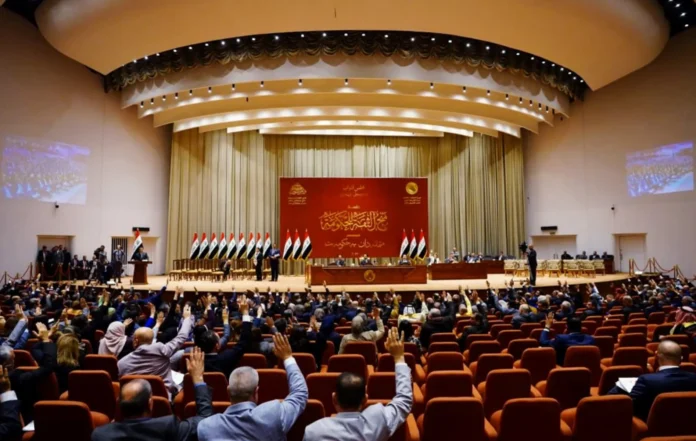
The Iraqi Parliament is holding a critical session today to decide the outcome of the Iraq presidential election. This vote will determine the country’s next president for the coming four years. The position has seen five presidents since the 2003 political transition following Saddam Hussein’s overthrow. Therefore, today’s session carries significant political weight and nationwide attention.
Nineteen candidates initially qualified for the presidential race after fulfilling constitutional requirements. Both the Parliament and the Supreme Federal Court approved their eligibility. However, the competition has narrowed to two main candidates: Fuad Hussein from the Kurdistan Democratic Party (KDP) and Nizar Amidi from the Patriotic Union of Kurdistan (PUK).
The Shiite Coordination Framework invited KDP and PUK delegations to a meeting yesterday. They discussed their positions and sought an agreement to facilitate a smooth Iraq presidential election. The goal was to meet constitutional deadlines while respecting national obligations. However, the meeting ended without a consensus, leaving both candidates to compete directly in parliament.
Traditionally, the presidency is reserved for the Kurdish component of Iraq’s political system. Yet, the KDP and PUK failed to unify behind a single candidate. Consequently, the vote will test the parliamentary system and the influence of other political blocs.
Political sources suggest the process will face challenges. The lack of consensus among Kurdish parties increases the likelihood of prolonged negotiations. Furthermore, support for candidates among other parliamentary groups remains fragmented. These factors could complicate reaching the two-thirds quorum required for a valid vote in the 329-member parliament.
Observers note that today’s session may influence Iraq’s political balance for years. The outcome of the Iraq presidential election could affect coalition-building, legislative priorities, and regional stability. Analysts also emphasize that political compromise will be essential to avoid extended uncertainty.
As the session proceeds, lawmakers are under pressure to finalize the vote efficiently. They must balance constitutional rules, party agreements, and national interests. Ultimately, the Iraq presidential election represents not just a leadership decision but a test of Iraq’s political process.
The world will closely watch the vote as Iraq navigates this delicate stage. Success requires cooperation among Kurdish factions, Shiite, Sunni, and other parliamentary blocs to ensure a legitimate outcome.
