
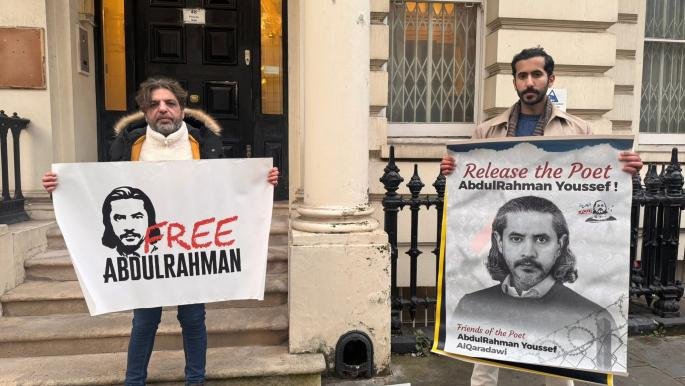
Activists gathered outside the United Arab Emirates embassy in London on January 9 to mark one year of al-Qaradawi’s detention. They held posters demanding information about his location and highlighting the absence of any communication. The vigil drew attention to al-Qaradawi’s detention and the wider implications for human rights in the region.
Al-Qaradawi, an Egyptian poet and opposition figure with Turkish citizenship, was arrested in Lebanon on December 28, 2024. Lebanese authorities acted on an extradition request from the UAE. Reports suggest his detention stems from opinions he publicly expressed. Human rights groups argue that this violates freedom of expression. They also state the arrest lacks credible legal justification.
Since arriving in the UAE, al-Qaradawi has had only two brief family visits, each lasting under ten minutes. Both meetings occurred under strict surveillance in undisclosed locations. Al-Qaradawi’s lawyers challenged the extradition in Lebanon’s highest administrative court but were unsuccessful. Meanwhile, UN Special Procedures experts issued urgent appeals to Lebanon, citing fears of torture, enforced disappearance, and unfair trial procedures.
Family members describe al-Qaradawi’s detention conditions as severe. He has reportedly spent long periods in solitary confinement. He cannot exercise, communicate freely, or access personal belongings, including books and photos of his children. Rights groups warn that these conditions have damaged his mental health.
Over the past year, international organizations have called for greater transparency and action. Seventeen rights groups issued a joint statement urging the UAE to disclose al-Qaradawi’s location, grant independent legal access, and end arbitrary detention. Activists stress that his detention sets a dangerous precedent for dissidents and human rights defenders in exile.
Al-Qaradawi rose to prominence in the 2000s for poetry critical of former Egyptian president Hosni Mubarak. He co-founded several opposition movements and organized protests during the Arab Spring. Prior to his arrest, he released a video from Damascus criticizing Arab governments, including the UAE, Saudi Arabia, and Egypt. Rights advocates believe this video contributed to his targeting.
Overall, the vigil in London and repeated calls from international organizations underscore the urgent need for accountability. Al-Qaradawi’s detention remains a focal point for debates on freedom of expression, political repression, and the protection of activists. Observers continue to urge authorities to resolve the situation promptly.
