
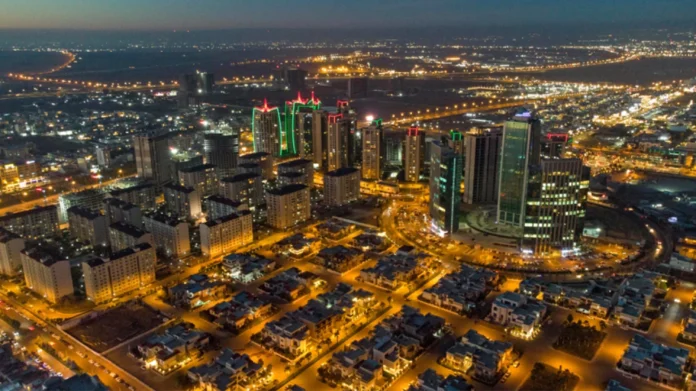
The Kurdistan Region has successfully restored electricity, marking a significant milestone in Kurdistan Region power restoration. Residents can now enjoy uninterrupted 24-hour service from the flagship Runaki project. This development highlights the region’s resilience and focus on stabilizing energy infrastructure. Clearly, Kurdistan Region power restoration plays a vital role in maintaining social and economic stability across the area.
Electricity returned to normal after severe blackouts caused by an attack on the Khor Mor gas field in eastern Sulaimani province. A liquid storage tank at the facility was struck, which halted gas supply and disrupted energy production. Meanwhile, the Runaki project, whose name means “light” in Kurdish, resumed providing consistent power to approximately four million residents.
The KRG emphasized that the attack caused an estimated 80 percent drop in regional electricity production. Officials coordinated closely to repair damages, restore supply, and communicate updates to the public. By Sunday, the situation stabilized, and 24-hour electricity returned to all areas covered by the project.
The disruption also affected Iraq’s nationwide power output. Baghdad lost around 1,200 megawatts due to the halt in gas from Khor Mor. Provinces such as Kirkuk, Nineveh, and Salahaddin experienced shortages, highlighting the interconnectedness of regional and federal electricity networks. Authorities in Baghdad maintained high-level coordination with the Kurdistan Region to mitigate the impact.
Adding to the challenges, gas imports from Iran were temporarily suspended due to pipeline maintenance. Iraq relies heavily on these imports, which normally supply 35 million cubic meters of gas per day. The combination of the Khor Mor attack and Iranian maintenance tested the country’s energy resilience.
The Runaki project remains the KRG’s key initiative to provide uninterrupted electricity and stabilize power infrastructure. Its success demonstrates the effectiveness of coordinated emergency responses and proactive planning. Moving forward, officials plan to continue investing in energy security and infrastructure improvements.
In conclusion, the Kurdistan Region power restoration reflects the government’s commitment to energy stability and resilience. Restoring full electricity supply ensures residents can rely on continuous power while supporting economic activity, social services, and overall regional development.
