
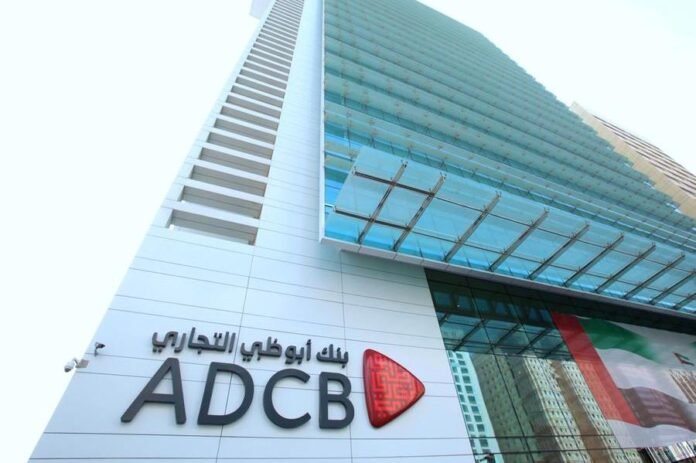
Abu Dhabi Commercial Bank (ADCB) has reported robust ADCB net profit growth in the third quarter of 2025, reflecting strong performance across multiple revenue streams. The bank posted a net profit of 3.09 billion dirhams ($841 million), marking a 29% increase year-on-year. This growth underscores the bank’s resilience amid changing market conditions and its focus on sustainable financial expansion.
Net interest income rose 21% to AED 3.81 billion due to higher lending volumes, while non-interest income jumped 32% to AED 2.07 billion. Consequently, ADCB’s total operating income climbed 25% to AED 5.87 billion. The bank’s diversified income streams have played a critical role in driving ADCB net profit growth and supporting its long-term financial strategy.
Despite these gains, impairment charges more than doubled compared to the same period last year, reaching AED 1.09 billion. Analysts noted that while impairment pressures increased, the bank’s underlying operations remained strong. This demonstrates the management’s ability to maintain performance amid challenging market dynamics.
For the nine-month period of 2025, ADCB recorded an 18% year-on-year increase in profit, totaling AED 8.10 billion. This strong performance reflects a combination of strategic lending, diversified revenue, and careful cost management. Through these measures, the bank continues to strengthen its market position and enhance shareholder value.
ADCB also reaffirmed its ambitious target to double its net profit to AED 20 billion within the next five years. This goal aligns with the bank’s broader vision of growth, innovation, and leadership in the UAE banking sector. Strategic initiatives, digital transformation, and careful capital allocation are expected to support this expansion and sustain ADCB net profit growth in the coming years.
Furthermore, the bank’s strong capital position enables continued investment in new products, services, and technology. By enhancing customer experience and operational efficiency, ADCB positions itself as a leading player in the region’s financial landscape. Analysts anticipate that these initiatives will further strengthen earnings, maintain competitive advantage, and ensure long-term profitability.
Overall, the bank’s Q3 performance demonstrates that ADCB is navigating market challenges effectively while achieving impressive growth. The continued ADCB net profit growth highlights its ability to capitalize on opportunities, diversify income, and maintain financial stability in a dynamic economic environment.
