
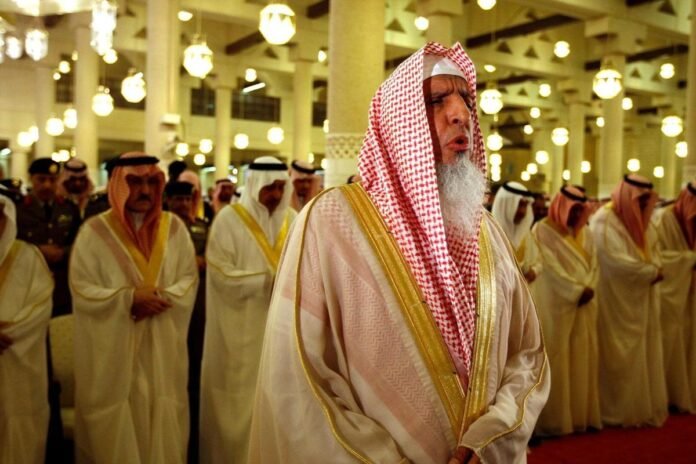
Saudi Arabia has named Sheikh Saleh bin Fawzan al-Fawzan as the kingdom’s new grand mufti, highlighting the importance of religious authority. This appointment reinforces the central role of religious authority in guiding Islamic rulings both domestically and internationally.
The king confirmed Sheikh Saleh’s appointment late Wednesday, following recommendations from the crown prince. Born in al-Qassim province, Sheikh Saleh studied the Quran with a local imam after his father passed away. Over decades, he gained recognition through books, television programs, and the Noor ala al-Darb radio show.
Sheikh Saleh succeeds the previous grand mufti, who held the position for more than 25 years until his death in September. Members of the al-Sheikh family, descendants of Sheikh Mohammed Ibn Abdul-Wahhab, traditionally serve as grand mufti, shaping the kingdom’s religious framework for centuries.
Throughout his career, Sheikh Saleh has issued strict Islamic rulings. He condemned Yemen’s Houthi rebels for firing missiles toward holy sites. In 2016, he banned the game Pokemon Go, citing gambling concerns. Social media often amplifies his fatwas, generating discussion across the Muslim world.
Experts note Sheikh Saleh’s rulings affect both religious practice and political views in Sunni-majority nations. His guidance reflects Saudi Arabia’s conservative interpretation of Islam, balancing tradition with contemporary challenges.
Observers point out that his appointment comes amid heightened regional tensions, particularly with Iran and ongoing conflicts in Yemen. His previous statements about Shia Muslims highlight the sensitive intersection of religion and politics in Saudi Arabia.
The new grand mufti will also influence education, governance, and social norms. Religious authority remains a key factor in shaping Saudi policies and guiding the kingdom’s Islamic discourse.
This appointment emphasizes the ongoing importance of religious authority in Saudi society. Sheikh Saleh’s decisions will affect millions and shape the kingdom’s international Islamic influence.
Religious authority appears multiple times to underline its central role in the grand mufti’s position and the wider Saudi context.
