
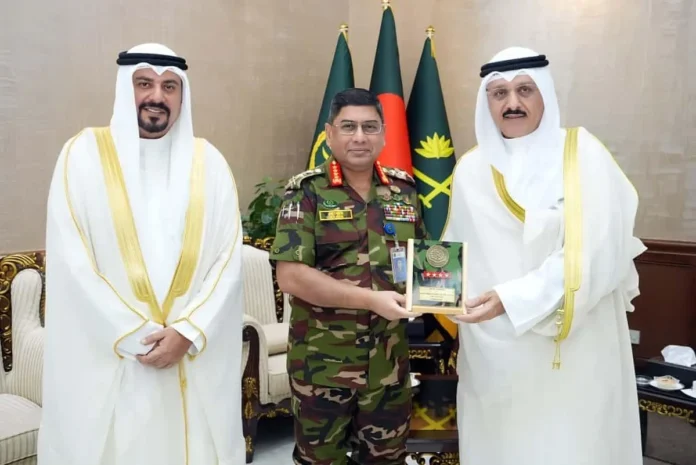
Kuwait is boosting its military cooperation with Bangladesh to improve defense coordination and strengthen bilateral relations. This effort reflects both countries’ focus on regional security and long-term partnership. They aim to enhance operational readiness and build stronger defense ties.
During a two-day visit, Kuwait’s Assistant Foreign Minister for Asian Affairs, Ambassador Sameeh Johar Hayat, met with Bangladeshi Chief of Army Staff, General Waker-Uz-Zaman. They discussed ways to increase joint training, share military knowledge, and address mutual security challenges. Both leaders stressed the importance of close collaboration to protect national interests.
The meeting included Kuwait’s Ambassador to Bangladesh, Ali Hamadah, and Bangladeshi Ambassador to Kuwait, Major General Syed Tareq Hussain, alongside senior military officers. They reviewed ongoing initiatives and explored new projects in logistics, training programs, and operational support. These efforts aim to improve the efficiency and readiness of both nations’ armed forces.
This visit followed the first round of political consultations between the foreign ministries of Kuwait and Bangladesh. The talks confirmed both countries’ commitment to strengthening bilateral cooperation in defense, trade, and technology. Ambassador Hayat also met Bangladeshi foreign ministry officials, delivering a letter from Kuwait’s Foreign Minister Abdullah Al-Yahya. The letter emphasized plans to expand diplomatic, economic, and military ties.
Experts say that high-level meetings like this improve regional stability and build trust between armed forces. Military cooperation allows better information sharing, coordinated responses, and stronger defense planning. It also encourages transparency, builds confidence, and ensures both countries can handle future challenges together.
Moreover, these collaborations support broader diplomatic efforts. Both sides plan to continue joint exercises, officer exchanges, and training programs. They will also share knowledge and best practices, helping improve long-term security and readiness.
In conclusion, Kuwait’s work with Bangladesh highlights a proactive approach to defense diplomacy. Strengthening ties ensures shared security interests are protected, regional stability is enhanced, and mutual trust is deepened. Military cooperation remains central to the partnership, providing a solid foundation for future projects and collaboration.
