
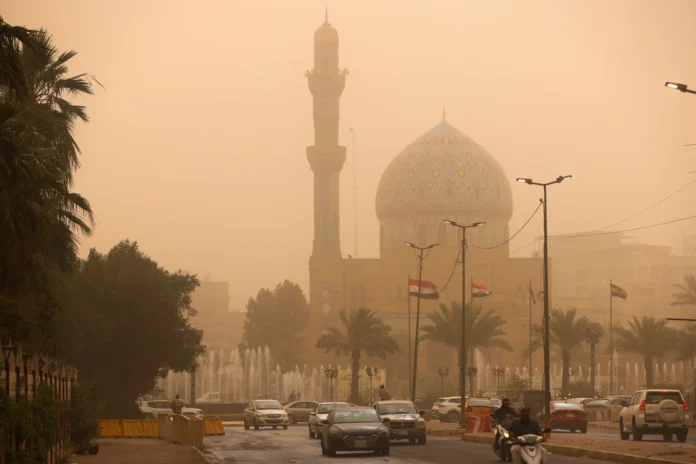
Iraq is facing a worsening environmental challenge as the Iraq dust storm crisis grows more severe. The Green Iraq Observatory identified six hotspots fueling the storms, concentrated mainly in the south but stretching across central and western regions. These areas have become the main drivers of destructive sand and dust storms.
According to international studies, desertification in these regions has created storm belts that extend beyond Iraq’s borders. The storms now sweep into Kuwait, Saudi Arabia, Qatar, the United Arab Emirates, Turkiye, and Iran. This cross-border impact highlights the regional scale of the Iraq dust storm crisis.
The Observatory stressed the importance of joint projects to mitigate damage. Iraq and Kuwait are working together on a southern dune stabilization project designed to reduce storm generation. Furthermore, Iraq coordinates with global institutions such as UN-Habitat, the Commonwealth, and the UN Environment Programme. These collaborations focus on building sustainable mechanisms that lessen the effects of dust storms.
The severity of the problem has already become evident. In April 2025, a massive dust storm blanketed large parts of Iraq. As a result, over 3,700 people required hospital treatment for respiratory issues. Basra and Najaf airports suspended flights, while government offices closed due to zero visibility.
Environmental experts warn that climate change, desertification, and water scarcity continue to accelerate the crisis. They emphasize that urgent action is necessary to protect public health and the economy. Moreover, they argue that regional cooperation offers the best chance for long-term solutions.
The Observatory also called for enhanced use of modern technology to monitor storm activity. It urged authorities to integrate early warning systems and expand community awareness campaigns. These measures could help minimize risks and prepare citizens for sudden weather changes.
The Iraq dust storm crisis now stands as one of the nation’s most pressing environmental emergencies. Without immediate and coordinated intervention, the storms may intensify and create deeper social, economic, and health challenges. Iraq’s ability to address the crisis effectively will depend on strong partnerships at both national and regional levels.
