
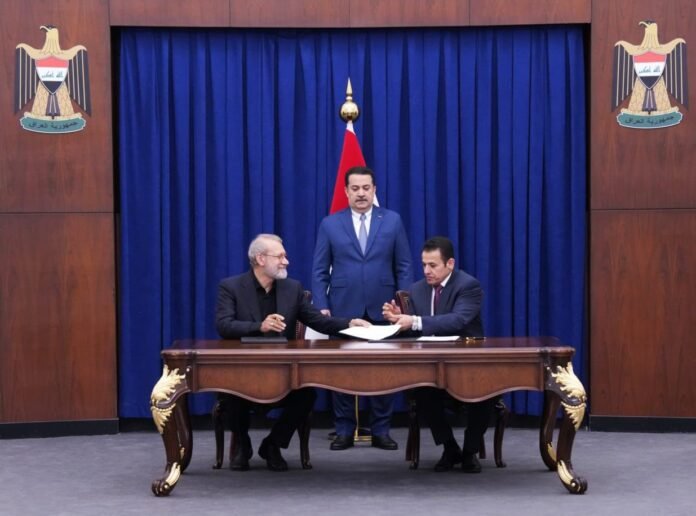
Iraq-Iran security cooperation has sparked sharp exchanges between Baghdad, Tehran, and Washington. Both Iraq and Iran firmly defended their recent agreement, dismissing US objections as interference in sovereign affairs.
The Iranian Embassy in Baghdad issued a strong statement on Wednesday. It criticized the United States for opposing the security agreement signed in Baghdad by Secretary of the Supreme National Security Council Ali Larijani. The embassy stressed that the pact reflects the will of both nations to strengthen ties based on good neighborliness and mutual respect.
Officials highlighted that Iraq-Iran security cooperation aims to guarantee peace and stability along shared borders. They also emphasized its importance for wider regional security. According to the embassy, this agreement will help combat terrorism and improve mutual trust between the two neighboring Muslim countries.
Moreover, the statement accused Washington of adopting a destabilizing approach toward the region. It argued that US actions are designed to create divisions among neighboring countries. The embassy said such interference violates the principles of the UN Charter and international law, which are based on cooperation between sovereign states.
The Iraqi Embassy in Washington also rejected the US position. It asserted that Iraq has full sovereignty and is free to sign agreements with other countries. Baghdad stressed that it does not follow the policies of any foreign government and will continue to act in the best interests of its people.
Previously, US State Department spokesperson Tammy Bruce criticized the pact. She claimed the United States supports Iraq’s sovereignty and opposes any laws that could make Iraq subservient to Iran.
Despite these remarks, Baghdad and Tehran maintain that Iraq-Iran security cooperation strengthens both nations’ ability to protect their borders and confront shared threats. They also insist that the deal supports regional stability, not division.
For both governments, this agreement is not only a security measure but also a political signal. It underlines their commitment to independence in decision-making and resistance to foreign influence in their internal and bilateral affairs.
