
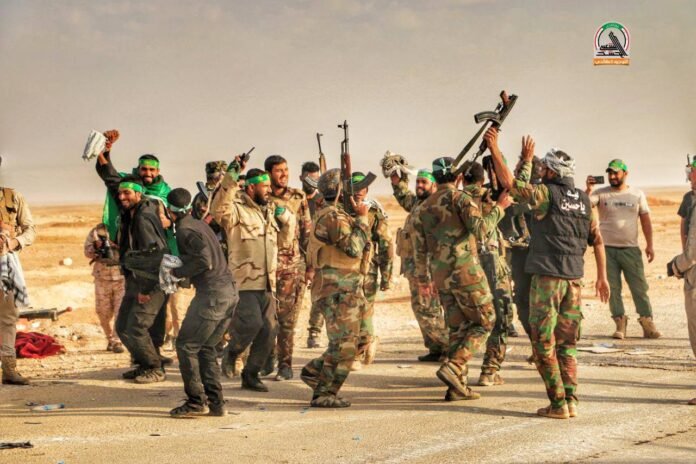
The Hashd al-Shaabi law has become one of Iraq’s most divisive political issues. A recent episode of the program There’s More on Rûdaw TV, hosted by Hêvidar Ahmed, explored the law’s far-reaching implications. The discussion highlighted both the hopes and fears surrounding this legislation.
Shia leaders argue that the law is a “guarantee of the state.” They believe it will secure Iraq’s stability and ensure national defense. According to them, the integration of Hashd al-Shaabi into state structures will strengthen central authority. They insist this step will prevent armed groups from operating outside government control.
However, opposition voices paint a very different picture. They warn that the Hashd al-Shaabi law could undermine democratic values. Critics claim it might give excessive power to one faction, creating long-term political imbalance. They also argue that it risks deepening sectarian divisions, which could destabilize Iraq further.
The debate is not limited to political circles. Civil society groups have also entered the conversation. Activists express concern that the law might limit political freedoms. They stress that a healthy democracy requires strong civilian oversight over all armed forces. In their view, militarizing politics has dangerous consequences for Iraq’s future.
At the same time, the law’s supporters maintain that fears are exaggerated. They argue that the legal framework will impose strict regulations on Hashd al-Shaabi. They believe this will make the force accountable to parliament and the judiciary. For them, the Hashd al-Shaabi law represents a long-term investment in security and sovereignty.
Still, tensions are running high. Television debates, newspaper columns, and social media platforms are filled with heated arguments. The issue has even divided some political parties internally. As the Iraqi parliament moves closer to a final vote, the stakes continue to rise.
