
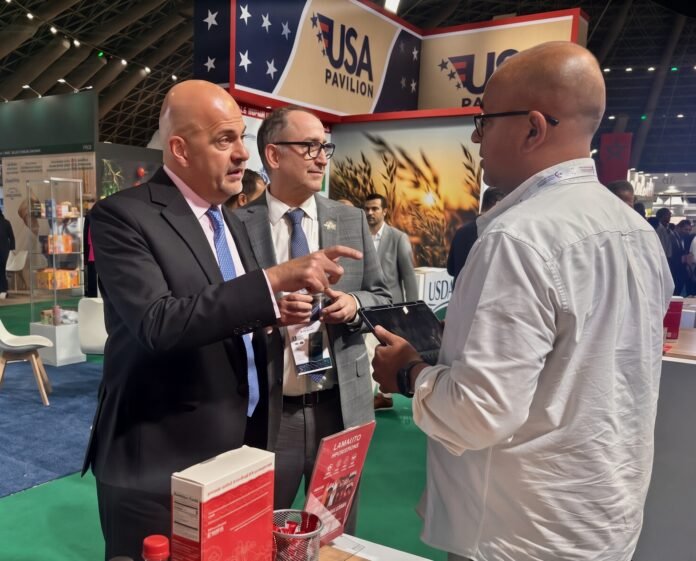
US Food Exports gained greater visibility in Saudi Arabia as American companies presented agricultural products at a major Jeddah exhibition. The United States hosted its first official pavilion at the recently concluded Saudi Food Show, bringing together dozens of companies and trade associations. The participating businesses aimed to introduce American products to Saudi importers, distributors and professionals across the food industry.
US Consul General in Jeddah Rafik Mansour visited the pavilion at the Jeddah Superdome during the exhibition. He met representatives from participating American companies, reviewed their products and encouraged them to explore opportunities within the Saudi market. The pavilion provided companies with direct access to industry professionals while creating opportunities for commercial discussions and potential partnerships.
The American display included a broad selection of agricultural and food products from different sectors. Visitors could find beef, potatoes, rice, grains, fresh produce, nuts, snacks, beverages and specialty food products. Several major American agricultural organizations also participated, including the USA Rice Federation, Potatoes USA and the US Meat Export Federation. Food Export Northeast and Food Export Midwest also joined the American delegation.
Meanwhile, the US presence came as agricultural trade cooperation between Washington and Riyadh continued developing. Saudi Arabia recently changed requirements affecting imports of US beef and beef products, creating additional opportunities for American producers. The change took effect on March 2, 2026, when Saudi authorities removed the requirement for US beef to participate in the USDA Agricultural Marketing Service Export Verification program.
The updated system continues to require compliance with Saudi halal standards for relevant products entering the Kingdom. Approved US-based halal certification bodies handle halal requirements, while the USDA Food Safety and Inspection Service continues providing applicable export certification. The arrangement therefore maintains food safety and halal requirements while changing how certain export conditions receive verification.
Agricultural Attaché Chris Frederick emphasized that halal compliance remains essential for companies seeking access to Saudi consumers. He explained that approved certification bodies in the United States handle the halal certification process under Saudi requirements. At the same time, US food safety authorities continue supporting the certification process required for exports.
Mansour also highlighted the broader commercial purpose behind the American pavilion. He said the US aims to encourage transparent trading conditions, clear requirements and science-based information that strengthens confidence in food safety. He added that the Saudi Food Show gives American businesses opportunities to introduce products, meet potential customers and develop their presence in the Kingdom.
In addition, Mansour sampled American beef during his visit, highlighting the range of products participating companies brought to the exhibition. The appearance reflected the broader effort to connect US producers with buyers and food-sector professionals operating in Saudi Arabia.
The Office of Agricultural Affairs at the US Embassy in Riyadh supports American agricultural businesses seeking opportunities in the Saudi market. Its work includes connecting US companies with importers, distributors and other professionals involved in the Kingdom’s food industry. Consequently, exhibitions such as the Saudi Food Show provide an important setting for companies to develop commercial relationships.
The Saudi Food Show also provided an international platform for food companies seeking access to the Kingdom’s growing market. The event brought together businesses from different countries and connected producers with buyers, distributors and industry representatives. Furthermore, international participation allowed companies to present products directly while learning more about opportunities within Saudi Arabia’s food sector.
For American agricultural producers, the exhibition created opportunities to explore new commercial relationships and understand market requirements. The wide variety of products displayed also demonstrated the breadth of American agricultural exports available to Saudi buyers.
US Food Exports therefore received greater exposure through the Jeddah exhibition, particularly as companies seek stronger commercial links with Saudi importers. The event also highlighted ongoing cooperation surrounding food trade, certification and market access between the two countries.
The American pavilion ultimately served as a meeting point for producers, exporters, trade associations and Saudi food-industry professionals. As companies continue exploring opportunities in the Kingdom, such events can facilitate direct communication and support wider agricultural trade connections.
