
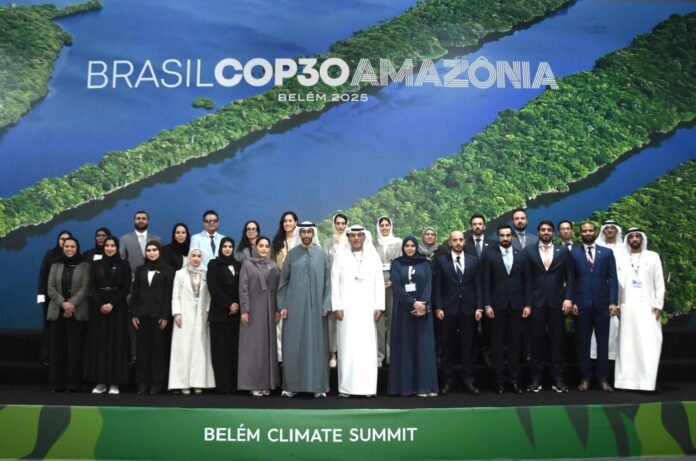
The UAE reinforced its global climate role during COP30 in Brazil, and UAE leads climate progress through clear commitments and strong international cooperation. The country sent a high-level delegation that focused on accelerating climate action, expanding partnerships, and supporting new financing solutions. The delegation also emphasized the importance of linking nature protection with long-term climate goals.
During several key discussions, UAE representatives highlighted major national strategies developed to support climate neutrality by 2050. They stressed that renewable energy growth plays a major role in these efforts. Moreover, they explained that transparency in reporting emissions remains essential for real progress. They also pointed out that effective partnerships strengthen climate action across many regions.
The delegation noted the success of the Mangrove Alliance for Climate. They revealed that the UAE already reached half of its 100 million mangrove target. This achievement demonstrates clear action and strong follow-through. Furthermore, they said that protecting biodiversity strengthens global adaptation and supports many vulnerable ecosystems.
The UAE also focused on climate adaptation and financing. Officials called for stronger Nationally Determined Contributions from all countries. They urged nations to boost adaptation plans with realistic goals. Additionally, they promoted innovative financing through the ALTÉRRA Fund, launched with a significant commitment. They explained that fresh funding helps countries address rising climate risks and supports long-term resilience.
During a roundtable on sustainable cooling, the UAE shared progress on its cooling commitments. They highlighted new global initiatives, including a committee and a financial facility. They also announced that sustainable cooling already forms part of their national climate plans. According to the delegation, collective action in this sector could reduce emissions dramatically by 2050.
The discussions also explored local implementation. Officials described how national climate strategies guide decisions in each city. They emphasized the need for forests, green spaces, and strong nature protection. They also stressed that real climate ambition requires shared responsibility across society.
Another session focused on adaptation financing and global economic risks. Officials warned that delays could harm global GDP significantly. They also described new tools that track climate progress and support private-sector investment. Furthermore, they reinforced the need for accurate data to guide climate decisions.
IRENA also shared insights ahead of COP30. The organization highlighted renewable energy goals and global progress. However, it warned that investment gaps continue to slow development in many regions. It also urged countries to improve supply chains, grids, and workforce training.
Throughout COP30, the UAE pushed for stronger, fairer, and faster progress. Delegates repeated that UAE leads climate progress because the country combines ambition with real action. They concluded that cooperation remains the only path toward a stable climate future, and UAE leads climate progress by strengthening this path for everyone.
