
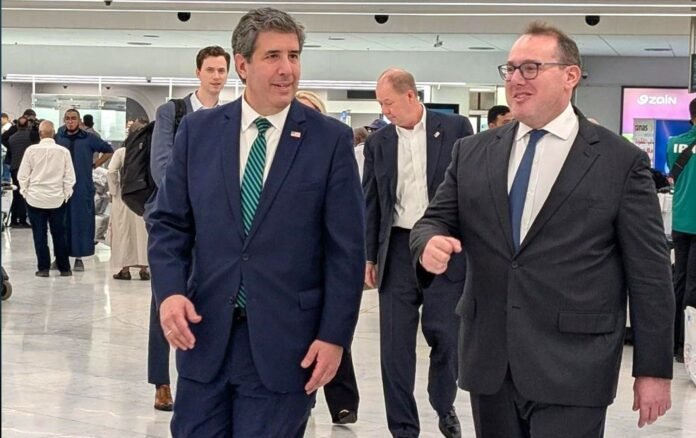
The United States is actively working with Erbil and Baghdad to strengthen defenses in the Kurdistan Region. This effort highlights the Kurdistan security partnership aimed at protecting critical infrastructure after recent attacks. Officials emphasized that excluding Iran-backed militias and terrorist groups from Iraq’s next government is essential to maintaining this partnership. Washington also called on Iraqi authorities to counter Tehran’s illicit financial activities and protect national wealth.
Recent attacks, such as the strike on the Khor Mor gas field in Sulaimani, disrupted 80 percent of the region’s power supply for days. Kurdish leaders condemned the assault and formally requested defense systems from the U.S. In response, Washington announced plans to establish protection systems across Iraq and the Kurdistan Region. These systems aim to safeguard infrastructure, economic activity, and regional stability.
The U.S. Chargé d’Affaires in Baghdad emphasized the urgent need to dismantle Iran-enabled militias. He warned that the proliferation of military capabilities among these groups threatens Americans, Iraqis, and the broader region. Officials also highlighted that including militias in Iraq’s next government would undermine the strategic partnership with Washington. Therefore, U.S. officials are pressing Iraqi authorities to take decisive action against these organizations.
Meanwhile, the Kurdistan Region continues political negotiations to form its 10th cabinet. The U.S. closely monitors discussions between the ruling Kurdistan Democratic Party and the Patriotic Union of Kurdistan. Washington stressed the importance of timely agreement to protect regional stability. Kurdish leaders’ engagement is viewed as vital to sustaining Iraq’s sovereignty and securing borders.
On the economic front, the U.S. supports the resumption of Kurdish oil exports through the Iraq-Turkey pipeline. Washington facilitated a tripartite agreement between Erbil, Baghdad, and international oil companies to restore energy exports. Officials said the agreement is critical for energy security, economic growth, and strengthening Iraq’s sovereignty. However, some actions by Iraqi ministry officials have slowed implementation, prompting U.S. dialogue for urgent resolution.
Overall, the U.S. commitment underscores a long-term focus on the Kurdistan Region’s security and economic stability. The Kurdistan security partnership reflects joint efforts to protect critical infrastructure, combat destabilizing militias, and reinforce regional collaboration. Washington continues to work closely with both Erbil and Baghdad, ensuring that security, governance, and economic development proceed effectively.
By actively coordinating defense measures, monitoring militia activity, and supporting energy agreements, the U.S. aims to maintain a stable and prosperous Kurdistan Region. The Kurdistan security partnership remains central to U.S. strategy in Iraq and the broader Middle East, highlighting the importance of cooperation, accountability, and rapid action.
