
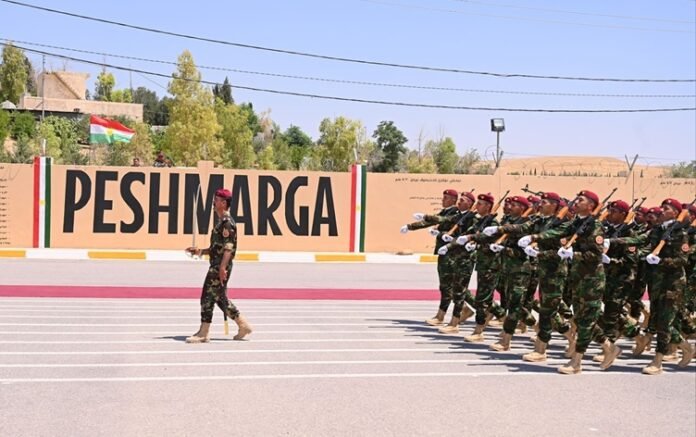
Kurdistan drone attacks wounded three Peshmerga fighters after multiple strikes hit Erbil and Sulaimani provinces. The Kurdistan Region’s Peshmerga Ministry confirmed the incidents on Wednesday. Authorities described the situation as a serious security escalation.
Moreover, the ministry reported that drones targeted two military headquarters. One site operated in Erbil, while another functioned in Sulaimani. As a result, three fighters sustained injuries during the attacks.
In addition, officials strongly condemned the strikes and called them unlawful. They also urged Iraqi authorities to take immediate action. Therefore, the ministry pressed for stronger measures to prevent further escalation.
Furthermore, the Kurdistan drone attacks follow a pattern of increasing aerial incidents. Since late February, the region has experienced repeated drone and missile strikes. Consequently, security forces have remained on high alert.
At the same time, defense systems intercepted several incoming drones. These systems prevented additional damage in multiple locations. However, the continued frequency of attacks raises growing concerns.
In addition, data shows a sharp rise in drone activity over the past days. More than ten drones reportedly targeted Erbil province in a short period. Meanwhile, Sulaimani also faced several attempted strikes.
Moreover, some attacks targeted districts such as Koya. Security units successfully destroyed incoming drones before impact. Therefore, many planned strikes failed to reach their targets.
On the other hand, earlier attacks in the region have already caused casualties. Previous incidents injured both security forces and civilians. As a result, authorities continue to investigate the source of repeated strikes.
Furthermore, officials reported that hundreds of drone and missile attacks have occurred since the conflict escalated. Most incidents concentrated in Erbil and nearby areas. Consequently, the region faces persistent aerial threats.
In addition, the Peshmerga Ministry emphasized the need for stronger national coordination. It called on federal leadership to limit armed group activity inside Iraq. Therefore, officials seek broader cooperation to stabilize security conditions.
Moreover, the ministry highlighted that repeated attacks threaten regional safety. It warned that continued incidents could destabilize civilian areas. As a result, urgent intervention remains necessary.
Casualties from earlier strikes include both military personnel and civilians. Injuries also affected foreign troops and emergency workers. Therefore, the humanitarian impact continues to grow alongside security risks.
Kurdistan drone attacks represent an ongoing challenge for regional stability. Authorities continue to strengthen defenses and monitor airspace activity. Kurdistan drone attacks therefore remain a central security concern in northern Iraq.
