
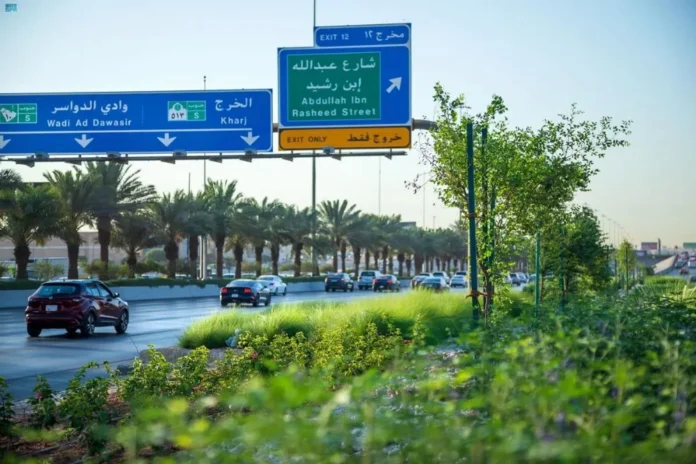
Saudi Arabia’s Ministry of Environment, Water and Agriculture has urged the public to plant more trees, describing them as one of the most effective natural ways to reduce extreme summer temperatures and improve urban environments.
The ministry said trees help cool cities by providing shade, reducing heat absorbed by roads and buildings, and releasing water vapor through transpiration, a natural process that lowers surrounding air temperatures. It added that a single tree can absorb an average of 150 kilograms of carbon dioxide each year, helping to reduce greenhouse gas emissions.
Officials said expanding green spaces also offers a range of environmental and public health benefits, including cleaner air, lower noise levels, improved mental well-being and better rainwater management. Trees also provide habitats for wildlife and support natural pollinators.
The ministry encouraged residents to plant native tree species, noting that they are better suited to Saudi Arabia’s climate and require less water than non-native varieties, making them more sustainable over the long term.
To improve tree survival during the summer, the ministry recommended watering plants early in the morning or late in the evening. It also promoted the use of drip irrigation systems, which can reduce water loss through evaporation by up to 50 percent compared with conventional irrigation methods.
Applying organic mulch around trees was also recommended to help retain soil moisture, regulate soil temperature and limit weed growth.
The ministry said tree planting is a long-term investment that supports environmental sustainability and future generations, while calling on communities to take an active role in expanding vegetation cover and protecting the Kingdom’s natural resources.
