
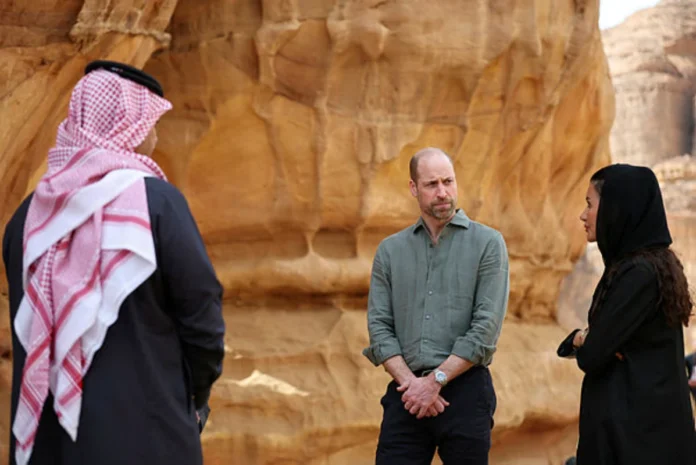
Britain’s Prince William is visiting Saudi Arabia, highlighting the kingdom’s growing tourism and environmental efforts. During his trip, he explores AlUla, an oasis city known for natural beauty and historic treasures.
The prince tours a local nature reserve and observes wildlife conservation programs. He meets rangers working to protect the area’s animals. Additionally, he learns about land restoration projects and sustainable farming initiatives led by local farmers. These efforts aim to balance tourism growth with environmental preservation.
AlUla also houses Hegra, a UNESCO World Heritage site famous for ancient Nabataean tombs. Visitors can see the tombs scattered across sandstone mountains and valleys. Prince William’s visit underscores the connection between heritage preservation and modern tourism development.
Saudi authorities have focused on making AlUla a premier destination for luxury travel and international art exhibitions. This strategy aligns with Saudi Crown Prince Mohammed bin Salman’s Vision 2030, which prioritizes tourism as a key economic sector. Investors see the kingdom’s cultural projects as opportunities for growth.
The visit reinforces the strong ties between Saudi and British royals. Previous state visits hosted by the late Queen Elizabeth II created lasting relationships. Likewise, Saudi Arabia remains one of Britain’s key Gulf partners.
Furthermore, the trip emphasizes environmental awareness. Prince William consistently advocates for conservation and sustainable practices. Observing local projects allows him to support initiatives that benefit both communities and the environment.
Historically, senior British royals visited Saudi Arabia to strengthen diplomatic and cultural bonds. Prince William follows in the footsteps of his father, King Charles III, who visited Riyadh years ago as Prince of Wales. Such visits maintain long-term cooperation in tourism, heritage preservation, and business opportunities.
In conclusion, Prince William’s Saudi Arabia tour highlights environmental and cultural projects while promoting tourism and sustainable investment. The trip demonstrates both nations’ commitment to growth, heritage, and global partnership.
