
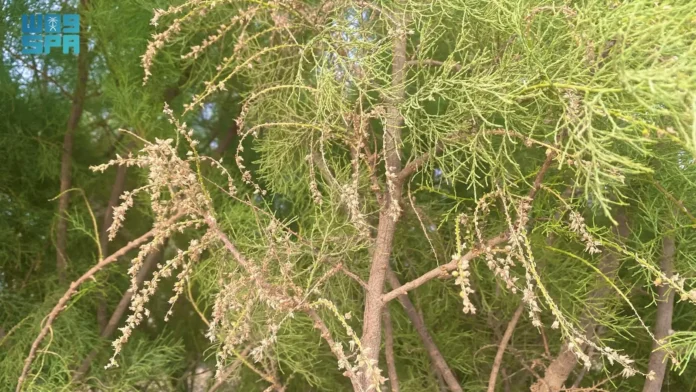
Saudi Arabia is increasing the use of desert-fighting trees to protect the environment and stop land degradation. The tamarisk tree, which resists drought, plays a key role in the Saudi Green Initiative. Planting these trees increases greenery and helps maintain ecological balance across the Kingdom.
In the past, tamarisk served many economic, social, and farming purposes. People used it to make plowing tools, water equipment, furniture, doors, and roofs. Its wood also helped with leather processing, showing its wide range of uses in Arabian society.
Experts say tamarisk grows well in harsh conditions and salty soil. This makes it ideal for fighting desertification in dry areas. Along with tamarisk, native trees like acacia, juniper, sidr, and ghaf are also planted as desert-fighting trees.
The Ministry of Environment, Water, and Agriculture leads these projects, planting millions of trees across the country. They also run campaigns to teach people about protecting the environment and using resources wisely. In addition, the ministry sets up centers to fight desertification, reduce pollution, and support biodiversity.
Tamarisk trees grow quickly and have graceful drooping branches, making them good for farms, gardens, and urban areas. While their leaves look like evergreen junipers, tamarisk is deciduous and sheds leaves seasonally. This adds variety and benefits the ecosystem.
Saudi Arabia has around 2,234 native plant species, many found in mountain regions like Asir and Baha. These areas get enough rainfall to support diverse plants and ongoing reforestation efforts.
The government’s work with desert-fighting trees also matches global sustainability goals. Using modern environmental methods, the Kingdom restores land and builds long-term ecological strength. Expanding these projects into communities increases public awareness and participation.
Besides stopping desertification, planting tamarisk and other native trees brings social and visual benefits. They improve air quality, prevent soil erosion, and create greener spaces for communities.
In short, Saudi Arabia’s focus on desert-fighting trees shows a full approach to caring for the environment. By planting tamarisk and other strong species, the Kingdom protects biodiversity, restores land, and supports sustainable ecosystems. Desert-fighting trees remain central to national efforts, creating greener landscapes and a healthy environment for future generations.
