
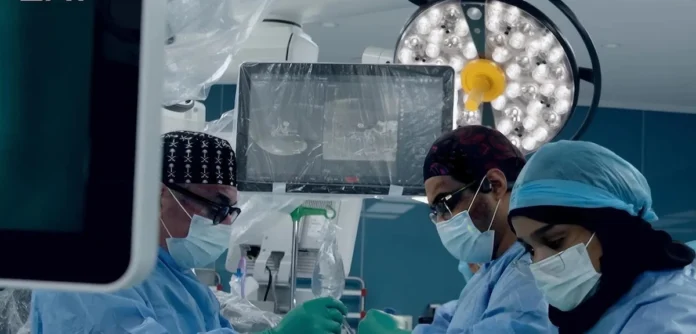
Saudi Arabia has reached a medical milestone with its first robot-assisted lumbar spine operation. The Robotic Spine Surgery procedure took place at Prince Naif Center for Medical Excellence and Innovation in Riyadh. A specialist team from the Ministry of Interior’s Medical Services performed the operation using advanced surgical technology. The procedure treated a patient experiencing severe degeneration of the lumbar vertebrae.
The medical team used the ExcelsiusGPS robotic surgical system to support the minimally invasive operation. According to the announcement, the patient regained mobility and walked within an hour after surgery. This early progress highlights the potential benefits of combining surgical expertise with advanced medical equipment. However, individual recovery times can vary depending on a patient’s condition and treatment needs.
The ExcelsiusGPS system combines surgical navigation technology with a robotic arm to assist surgeons during operations. Before surgery, specialists can plan the procedure and identify precise locations for surgical instruments. During the operation, the system helps guide those instruments toward the planned positions. As a result, surgeons can work with greater precision while limiting disruption to surrounding tissues.
Moreover, minimally invasive techniques aim to reduce the physical impact of surgery compared with more extensive procedures. In suitable cases, these approaches may help patients begin moving sooner during recovery. Nevertheless, outcomes depend on several factors, including the severity of the condition and the patient’s overall health. The reported recovery following this operation represents an encouraging result for the medical team.
The achievement also marks an important early development for Prince Naif Center for Medical Excellence and Innovation. The center operates within the Ministry of Interior’s Medical Services program, which oversees medical cities. Through this initiative, the ministry aims to strengthen specialized healthcare services and introduce advanced treatment methods. The operation therefore reflects wider efforts to expand the use of modern medical technologies in Saudi Arabia.
Furthermore, the center seeks to develop spinal surgery by combining national medical expertise with international experience. Its approach includes adopting advanced equipment, improving clinical practices and supporting the transfer of medical knowledge. These priorities could help specialists build experience with newer surgical methods over time. They also support efforts to improve the quality of care available to eligible patients.
The successful operation places Robotic Spine Surgery among the center’s notable early achievements. It demonstrates how robotic assistance can support a specialist team treating a complex spinal condition. At the same time, continued evaluation and clinical experience will remain important as the technology becomes part of routine practice. Medical teams must assess each patient carefully to determine whether a robotic approach offers appropriate benefits.