
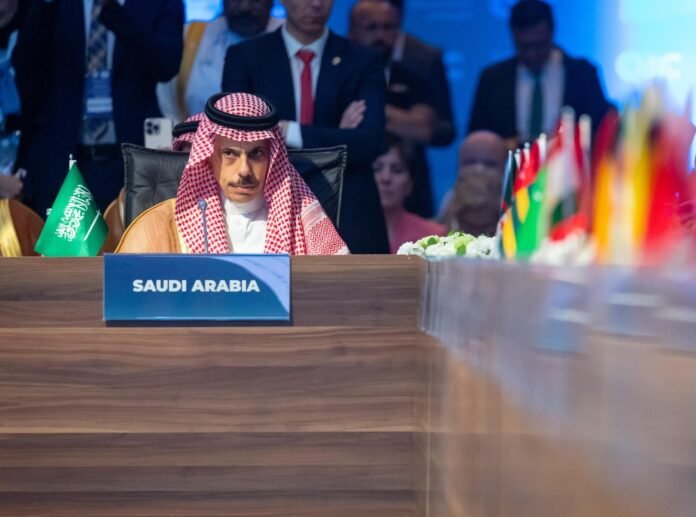
Saudi Arabia calls for end to Israel-Iran war as tensions in the Middle East reach dangerous levels. The Kingdom issued a strong appeal early Sunday, urging immediate cessation of hostilities. It warned that continued fighting risks igniting a wider regional conflict.
The call followed hours after U.S. President Donald Trump confirmed he authorized airstrikes on Iranian nuclear sites. However, this military action shocked world capitals and sparked widespread concern. Saudi Arabia urged “maximum restraint” and appealed to the international community to intervene diplomatically.
In an official statement, the Saudi Foreign Ministry stressed the need for de-escalation. It called for all parties to return to dialogue and peaceful negotiation. The statement highlighted that the region cannot afford another devastating war.
The Saudi intervention comes amid escalating clashes between Israel and Iran. Recent weeks have seen unprecedented military engagement. Trump’s airstrikes targeted nuclear sites in Fordow, Natanz, and Isfahan, marking the first direct U.S. attack since the conflict intensified.
Speaking from the White House, Trump defended the strikes as “measured, precise, and necessary.” He claimed the action prevented a planned “massive retaliatory strike on Israel” by Iran. Trump also warned that the U.S. would not tolerate threats against its allies or forces in the region.
Iran’s leadership condemned the U.S. attack while a “blatant act of war.” Supreme Leader Ayatollah Ali Khamenei vowed a strong response “at a time and place of our choosing.”
The strikes prompted mixed reactions globally. French President Emmanuel Macron also called the escalation dangerous and urged a diplomatic path. German Chancellor Olaf Scholz echoed calls for de-escalation and dialogue. UN Secretary-General António Guterres expressed deep concern and emphasized the urgent need for restraint.
Russian President Vladimir Putin criticized the U.S. action as a severe breach of sovereignty and suggested possible military moves to protect interests in Syria and the Gulf. Conversely, Israeli Prime Minister Benjamin Netanyahu praised the strikes as a “historic turning point” against Iran’s nuclear ambitions.
In conclusion, Saudi Arabia calls for end to Israel-Iran war while urging restraint and diplomacy. The Kingdom seeks to prevent further conflict and promote peace amid rising political tensions. As global leaders react, the future of the Middle East remains uncertain, with diplomacy seen as the key to avoiding disaster.
