
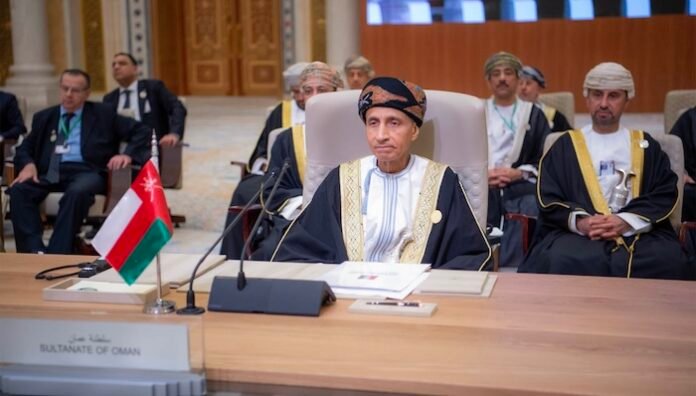
Sayyid Fahd bin Mahmoud Al Said left a remarkable legacy in Omani politics and development. His dedication over decades contributed significantly to Oman’s modern renaissance. Through his leadership, public policies, and diplomacy, he strengthened national growth and international relations, making his impact widely recognized.
Born on October 5, 1940, in Muscat, Sayyid Fahd pursued higher education with determination. He graduated from Cairo University in 1965 with a degree in Economics. Later, he earned a Master’s degree in Political Science and Economics from the Sorbonne University in 1970. Furthermore, he mastered multiple languages, including Arabic, French, and English, which enabled him to represent Oman effectively on the international stage.
Sayyid Fahd’s career began during the era of Sultan Qaboos bin Said. He assumed several critical government roles, starting as Minister of Foreign Affairs from 1971 to 1973, and then as Minister of Information and Culture until 1979. In 1979, he became Deputy Prime Minister for Legal Affairs, serving until 1994, and later held the role of Deputy Prime Minister for the Council of Ministers until 2026.
In addition to these positions, Sayyid Fahd chaired major committees shaping Oman’s progress. These included the Supreme Committee for the Conferences of the GCC, the Sultan Qaboos University Council, the Royal Opera House Higher Committee, and the Supreme Committee for the Five-Year Development Plans. His guidance influenced Oman’s economic, educational, and cultural growth significantly.
Moreover, Sayyid Fahd played a crucial role in advancing Oman’s diplomacy. He represented the country in international forums, Gulf summits, and Arab conferences. He conducted official visits to Japan, Iran, Thailand, South Korea, Singapore, and multiple Arab nations. Consequently, these visits strengthened bilateral relations, particularly in economic and cultural collaborations.
Throughout 56 years of service, Sayyid Fahd demonstrated exceptional diplomacy, composure, and vision. He earned respect for his eloquence, sound judgment, and ability to articulate Oman’s national vision. His commitment to public service shaped policy, development strategies, and Oman’s international reputation. His work reflects how leadership, diplomacy, and policy expertise can transform a nation.
Sayyid Fahd’s legacy remains a cornerstone of Oman’s modern renaissance. His leadership, vision, and dedication continue to inspire national progress. Oman’s development story would be incomplete without acknowledging his remarkable contributions. The influence of Sayyid Fahd bin Mahmoud Al Said underscores how effective leadership can drive lasting change. Sayyid Fahd’s legacy continues to define Oman’s path in governance and development today.
