
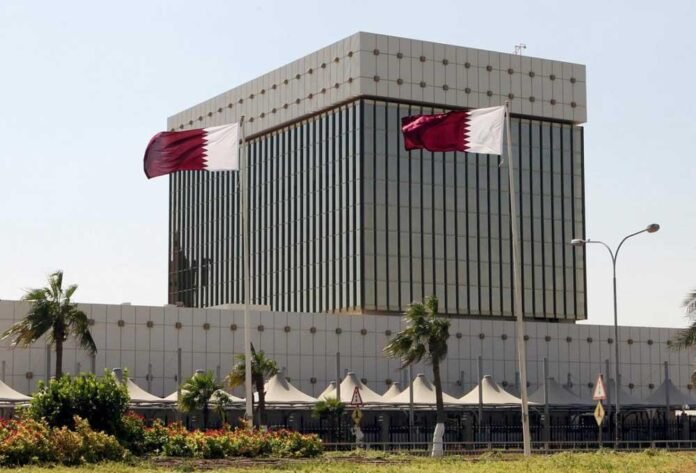
The total assets of commercial banks operating in Qatar reached QR2.06 trillion in February 2025. This marks a 4.7% year-on-year increase, according to official data released by the Qatar Central Bank (QCB).
QCB outlined key highlights from its February 2025 Monthly Monetary Bulletin. It offered insight into the country’s banking sector performance. The data reflects steady growth across several key indicators.
Domestic deposits also saw modest growth, rising 1.2% on a yearly basis to reach QR855.5 billion. Similarly, domestic credit expanded by 4.7% year-on-year, totaling QR1.32 trillion during the same period.
However, the broad money supply (M2) registered a slight decline of 1.1%, standing at QR739 billion in February.
A recent KPMG report reaffirmed Qatar National Bank (QNB)’s position as the largest bank in the Gulf Cooperation Council (GCC). Its assets have reached $356 billion. The report also highlighted Qatar’s leadership in banking efficiency across the region. Qatar has the lowest cost-to-income ratio at 25.6% and the highest stage 3 loan coverage ratio at 85.1%. This signals strong financial health and resilience.
These developments align with Qatar’s long-term development blueprint — the Qatar National Vision 2030 (QNV) — and its Third Financial Sector Strategic Plan. The financial sector remains a critical enabler in the country’s economic diversification efforts. It supports the goals outlined in the National Development Strategy 3 (NDS-3), which focuses on sustainable economic growth, societal welfare, and quality of life.
Qatar’s banking industry is also embracing transformation by integrating technological innovations and aligning with international risk management and regulatory standards. This shift includes the adoption of FinTech and a strong commitment to Environmental, Social, and Governance (ESG) principles.
Local banks are now actively issuing green bonds and eco-friendly loans, reflecting an increased focus on sustainability and responsible investment. These initiatives highlight the sector’s role not just in financial stability but also in environmental stewardship and social development.
As the banking sector evolves in line with global economic trends, Qatar continues to position itself as a regional financial hub. It boasts a resilient and forward-looking banking infrastructure.
