
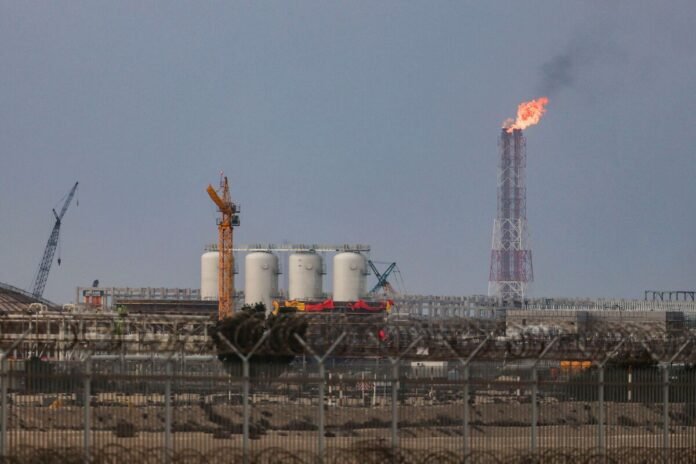
Qatar Pearl GTL attack impact continues to raise concerns after Shell reported damage at its major gas-to-liquids facility in Ras Laffan. The incident follows recent missile strikes targeting key energy infrastructure in Qatar. Authorities now assess both safety and production risks.
Moreover, Shell confirmed damage at the Pearl GTL plant after the attack. The company operates the facility in partnership with Qatar’s energy sector. As a result, engineers immediately began inspection and repair work.
In addition, the fire caused by the attack has already been extinguished. Officials confirmed that all staff remained safe. Therefore, no casualties occurred during the incident.
Furthermore, the Qatar Pearl GTL attack impact extends beyond immediate structural damage. The facility plays a major role in global gas-to-liquids production. Consequently, any disruption could affect international fuel supply chains.
At the same time, Shell stated that it continues working closely with QatarEnergy. Both sides coordinate efforts to evaluate the full extent of the damage. Therefore, technical teams remain on-site for assessment.
Moreover, QatarEnergy reported earlier that missile strikes caused fires at Ras Laffan Industrial City. This area hosts some of the country’s most important energy facilities. As a result, emergency measures activated across the site.
In addition, the Pearl GTL plant stands as the world’s largest gas-to-liquids facility. It processes large volumes of natural gas into liquid fuels. Therefore, its stability holds global economic importance.
Furthermore, the Qatar Pearl GTL attack impact highlights growing risks to energy infrastructure. Recent regional tensions have repeatedly targeted oil and gas facilities. Consequently, energy companies now face increased operational uncertainty.
At the same time, Shell emphasized that it accounted for all personnel. Safety teams continue monitoring conditions across the facility. Therefore, operations remain under strict supervision.
Moreover, analysts warn that repeated attacks could disrupt global energy markets. The Pearl GTL plant alone produces significant daily fuel output. As a result, any prolonged shutdown may influence supply stability.
In addition, cooperation between Shell and Qatari authorities continues to strengthen. Both sides aim to restore full operations as soon as possible. Therefore, recovery efforts remain a top priority.
The Qatar Pearl GTL attack impact reflects wider instability across the Gulf region. Energy sites increasingly face security risks from ongoing conflict. Consequently, companies reassess safety strategies and infrastructure protection.
Shell continues evaluating the damage while maintaining operational safety standards. The situation remains under close observation by all stakeholders. Qatar Pearl GTL attack impact therefore remains a key issue for global energy security.
