
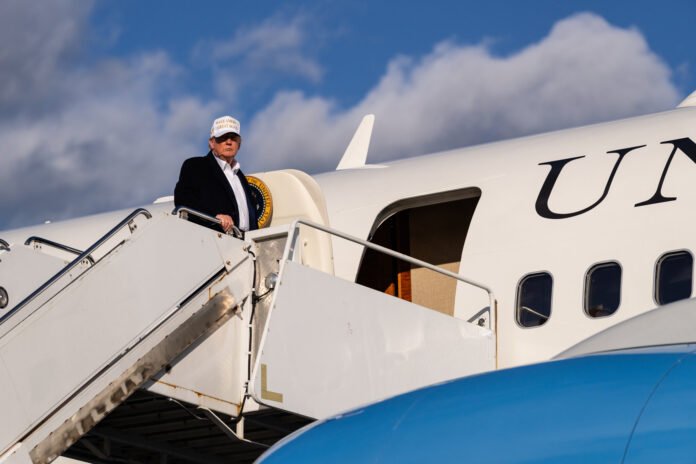
Qatar’s jet Air Force One plan continues to move forward as officials push for faster readiness. Moreover, U.S. defense leaders now expect the refurbished aircraft to support presidential travel soon. As a result, attention has shifted toward how the donated jet fits into national aviation needs. In addition, the plan reflects broader efforts to modernize presidential transport.
Qatar’s royal family donated a Boeing 747-style jet to the United States. Therefore, military teams immediately began technical and security work. First, engineers upgraded communication and defense systems. Then, security specialists inspected the aircraft for intelligence risks. Consequently, the jet advanced closer to operational status.
The Qatar jet Air Force One plan aims to replace aging aircraft currently in service. These older planes have flown for decades. However, technical problems now occur more often. Recently, an electrical issue disrupted an overseas trip. Because of that problem, the president switched aircraft mid-journey. Thus, demand for a reliable replacement increased.
Meanwhile, long-term replacement projects continue to face delays. New presidential aircraft remain under construction. Until completion, officials need an interim solution. Therefore, the donated jet offers short-term relief. In this way, the Qatar jet Air Force One plan fills a critical gap.
Supporters highlight cost savings and practicality. They argue that the aircraft supports national defense needs. President Trump has defended the decision strongly. He described the donation as a sensible contribution. He also stressed that refusing a free aircraft would lack logic.
However, critics continue to raise concerns. Congressional Democrats question the ethics of accepting foreign gifts. In addition, watchdog groups warn about public trust issues. They argue that taxpayers still fund retrofitting costs. Moreover, they fear potential security risks despite inspections.
Despite criticism, defense officials continue preparation work. They aim to ensure full compliance with safety standards. Consequently, the aircraft edges closer to active service. Political debate persists, yet operational planning remains steady.
The Qatar jet Air Force One plan now stands at the center of both cooperation and controversy. On one hand, it offers immediate capability. On the other hand, it fuels ethical debate. Nevertheless, officials focus on readiness and performance.
Ultimately, the donated aircraft may soon carry the president on official missions. Until permanent replacements arrive, the jet could serve an important role. Therefore, the plan highlights challenges within defense procurement and political trust.
