
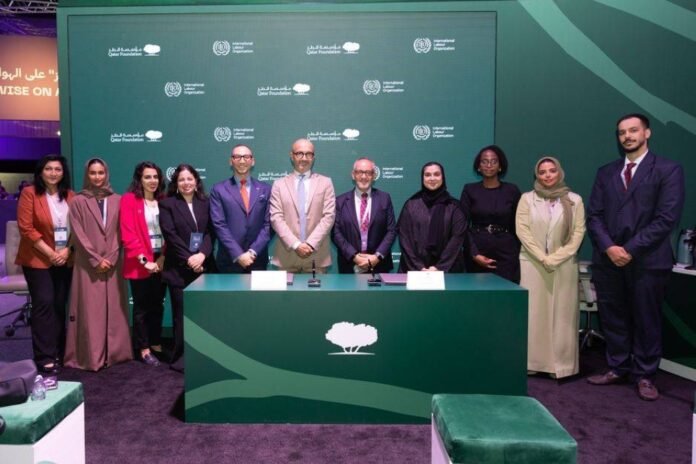
Qatar advances workforce development through a new partnership between Qatar Foundation and the International Labour Organisation. Moreover, this partnership strengthens evidence-based policymaking that guides education and employment. Additionally, the focus on workforce development ensures graduates are ready for a knowledge-based economy.
The collaboration will use data from Qatar Foundation’s Alumni Impact Study. The study tracks employment outcomes, career progress, and graduate perceptions over 25 years. In addition, other labor market studies will support five co-authored policy briefs. These briefs will provide practical recommendations for policymakers and support human capital growth.
The partnership targets five key areas. First, it will address skills gaps and mismatches between graduates and employers. Second, it will focus on national talent retention. Third, the project will explore how higher education encourages entrepreneurship. Fourth, universities will examine better alignment with labor market needs. Finally, the initiative will promote gender equality and inclusive employment.
Qatar Foundation and the International Labour Organisation formalized the partnership through a Memorandum of Understanding. The signing occurred at the WISE 12 Summit in Doha. The summit, hosted by Qatar Foundation’s global education initiative WISE, gathered leaders to encourage collaboration and innovation in workforce planning.
Francisco Marmolejo, President of Higher Education and Education Adviser at Qatar Foundation, said the education model provides deep insights into student and alumni outcomes. He added that the collaboration with the ILO will generate practical policy recommendations. Furthermore, it will strengthen dialogue with stakeholders and support initiatives aligned with Qatar’s Third National Development Strategy.
Francesco d’Ovidio, Country Office Director of the ILO Doha, highlighted that the partnership marks the first formal collaboration between the organizations. He explained that structured access to the anonymized Alumni Impact Study allows the ILO to apply global analytical frameworks. Consequently, the resulting insights will support Qatar National Vision 2030, develop a future-ready workforce, and guide labor policies based on decent work principles.
Overall, this partnership demonstrates Qatar’s commitment to workforce development. In addition, it combines research, policy guidance, and stakeholder engagement to equip graduates with essential skills. Therefore, Qatar Foundation and the ILO aim to support sustainable national growth while fostering a knowledge-based economy.
