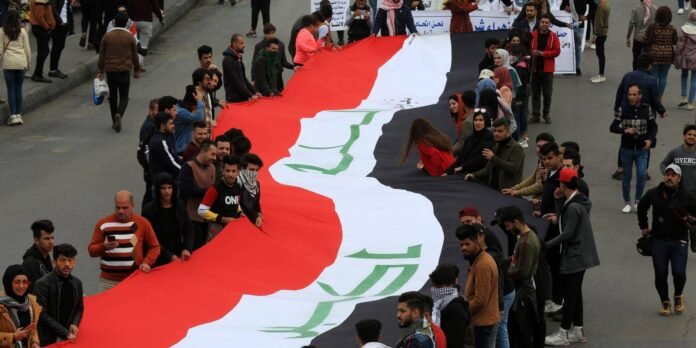
Protest rights in Iraq have once again become a heated topic. Parliament recently revived a controversial draft law on public demonstrations. The timing has raised many eyebrows, especially with elections looming.
At first glance, the law seems to offer clearer procedures. Protesters would no longer need approval, only a 48-hour notice to local authorities. However, deeper sections of the law suggest more control than freedom. The draft removes earlier mentions of “freedom of expression” and “right to knowledge.” Legal experts warn this signals a shrinking space for open discourse.
Furthermore, protest rights in Iraq face limits hidden behind vague terms. Authorities can still block demonstrations for “security” or “organizational” reasons. These loosely defined terms create room for abuse. Many fear these rules could silence political opponents under a legal façade.
The law also bans face coverings and offensive slogans. While safety matters, critics say these bans mimic past restrictions used to intimidate. Moreover, it introduces definitions for sit-ins, strikes, and spontaneous gatherings—terms that never had legal clarity in Iraq before. But the intention behind these additions remains questionable.
Security forces must now protect peaceful demonstrators and avoid force unless violence breaks out. That aligns with international norms. Citizens also gain the right to appeal bans in court. Yet, without independent judges, even these rights could be undermined.
Legal professionals have flagged at least 17 flaws in the current draft. They argue that protest rights in Iraq already exist in the constitution. Article 38 clearly guarantees peaceful assembly and freedom of expression. But this law, they say, weakens both.
Problems include a vague appeals process, unclear data privacy protections, and a 10 p.m. protest curfew. That curfew even affects weddings and funerals. Analysts believe these broad restrictions could invade cultural and religious life.
Activists also warn about the growing power of police under this law. The security forces would gain control over protest procedures. Critics believe this power should stay with civilian institutions, not the police.
The protest law would also replace U.S. occupation-era rules. On paper, that seems like progress. But many believe this change comes with more control, not more freedom.
Political experts warn that the government might use this law to crush dissent. If “public order” and “morality” remain undefined, leaders can suppress any protest they dislike. This is especially worrying as Iraq nears its elections.
Some call for a full rewrite of the law. They demand involvement from civil society groups. Any true legal reform, they argue, must reflect the voices of the people—not just the will of those in power.
In the end, the new draft law raises serious concerns. While it claims to protect demonstrations, many view it as a tool to limit protest rights in Iraq. Until these concerns are addressed, trust in the law will remain low—and public resistance may only grow stronger.