
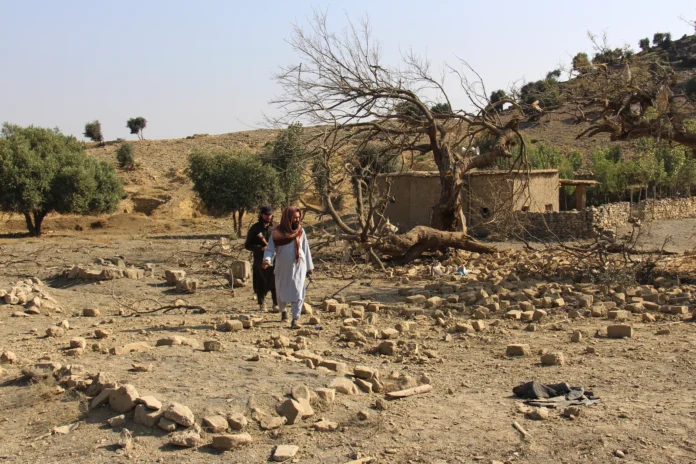
Pakistan Strikes against alleged militant positions in Afghanistan have triggered competing casualty claims from Islamabad and Kabul. Pakistan said its forces targeted militant hideouts in two Afghan provinces during overnight operations. The Pakistani Information Ministry said initial reports indicated that 22 militants died during the strikes. It also said the operations involved efforts to target militant locations and seize weapons.
Afghan authorities, however, presented a different account of the attacks and their consequences. Kabul said the strikes killed nine civilians, including women and children, while injuring another 11 people. Afghan officials said the attacks struck civilian areas rather than only militant positions. Authorities on both sides continued presenting conflicting accounts as tensions remained elevated along their shared border.
Neither side’s casualty figures could immediately receive independent verification following the reported overnight attacks. Consequently, the competing claims remain subject to further investigation and additional information from authorities. The conflicting accounts also reflect the broader disputes surrounding cross-border military operations between Afghanistan and Pakistan.
According to Pakistani officials, the strikes focused on locations they identified as militant hideouts. Islamabad has repeatedly accused militant groups operating from Afghan territory of launching attacks inside Pakistan. Pakistani authorities maintain that military operations inside Afghanistan target armed groups rather than civilians. Afghan authorities have repeatedly rejected accusations that they provide safe havens for militants targeting Pakistan.
Meanwhile, Afghanistan has continued denying allegations that its territory supports attacks against Pakistan. Afghan officials have instead accused Pakistan of conducting military operations that violate Afghanistan’s sovereignty. The latest strikes therefore add another episode to an increasingly tense relationship between the neighboring countries.
Cross-border violence has increased significantly as both governments continue disputing responsibility for militant activity. Pakistan has carried out several air operations inside Afghanistan during periods of heightened tensions. Afghanistan, meanwhile, has repeatedly condemned those operations and challenged Pakistan’s claims about militant targets.
The dispute also involves longstanding concerns surrounding militant groups operating near the Afghanistan-Pakistan border. Pakistan has particularly focused its accusations on the Pakistani Taliban, also known as Tehrik-e-Taliban Pakistan. Islamabad says the group uses Afghan territory to organize attacks against Pakistani targets. Afghan authorities deny allowing militant organizations to operate freely from their territory.
The latest Pakistan Strikes therefore highlight the continuing security dispute between Kabul and Islamabad. The competing accounts also demonstrate the difficulty of independently confirming events in remote border areas. Access restrictions, security concerns and conflicting official statements can complicate efforts to establish casualty figures quickly.
The United Nations has also documented significant civilian harm linked to cross-border violence during 2026. Its Afghanistan mission previously reported civilian deaths and injuries following Pakistani military operations in several Afghan provinces. In one June assessment, the mission confirmed at least 28 civilian deaths and 49 injuries following airstrikes in Paktya, Paktika and Kunar.
More broadly, United Nations reporting has described continuing civilian risks from cross-border clashes. The violence has affected communities across several provinces near the Pakistani border. Humanitarian agencies have also faced difficulties reaching some affected populations because fighting and movement restrictions disrupt access.
The latest attacks come as both countries continue facing pressure to address militant activity and border security. Pakistan argues that military action remains necessary against groups responsible for attacks inside its territory. Afghanistan, by contrast, continues rejecting claims that it shelters militants and objects to Pakistani military operations.
Pakistan Strikes could therefore further complicate already strained relations between the neighboring governments. The latest incident adds to a pattern of military confrontations, accusations and competing narratives surrounding cross-border security.
For now, authorities continue assessing the reported damage and casualties from the overnight operations. Further information could clarify the locations targeted and the number of people affected. Until independent verification becomes available, the casualty figures announced by Pakistan and Afghanistan remain competing claims.
The latest developments underscore the continuing security challenges along the Afghanistan-Pakistan border. Both governments face pressure to address militant threats while limiting further civilian harm. The situation remains closely monitored as officials assess the consequences of the latest strikes and consider their broader implications for bilateral relations.
