
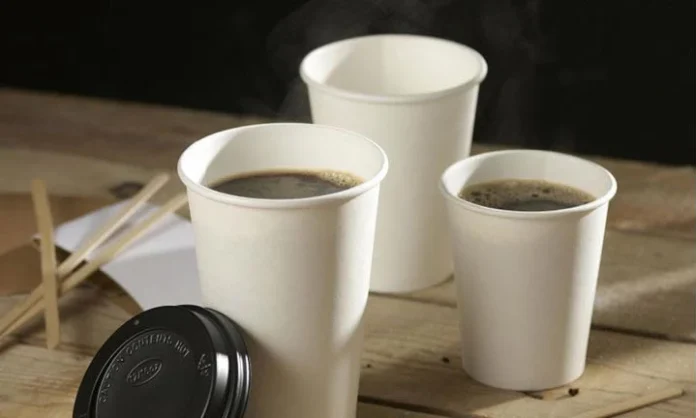
A new study by Omani researchers has found that single-use paper cups sold in the country comply with current food safety regulations but may release tiny polymer particles, including possible microplastics, when used with hot drinks.
The study, published in the peer-reviewed journal Food and Bioproducts Processing, was conducted by researchers from the Ministry of Agricultural, Fisheries Wealth and Water Resources, Sultan Qaboos University, Nottingham Trent University, and other research institutions.
Researchers tested 13 brands of paper cups available in Oman using conventional food safety methods alongside advanced analysis to detect polymer particle release. They also surveyed 868 consumers to examine paper cup usage.
The survey found that more than half of respondents use between one and three paper cups each day. Tea was the most commonly consumed beverage in paper cups, followed by coffee, with cafés and workplaces identified as the most frequent places of use.
Laboratory tests showed all of the paper cups met existing European food-contact safety limits, indicating they are considered safe under current regulations.
However, the researchers also found evidence that some cups released polymeric particles, including potential microplastics, particularly when exposed to hot beverages. They noted that current food safety tests do not assess this type of particle release.
The study concluded that chemical migration and particle release should be evaluated separately, as no direct link was found between the two.
Researchers recommended updating food-contact safety standards to include assessments for microplastic and particle emissions. They also encouraged consumers to use reusable cups where practical and called for improvements in the internal coatings used in paper cup manufacturing to reduce material degradation.
