
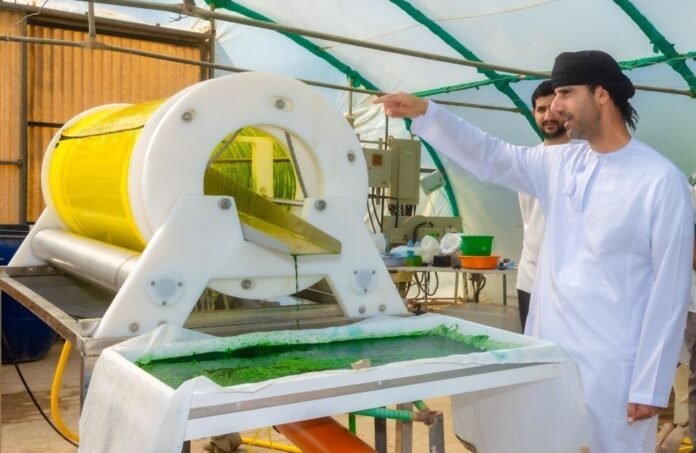
Oman has reached a new milestone in research and innovation this week. This achievement highlights the importance of sustainable algae production for food security and economic growth.
Sultan Qaboos University announced the successful commercial-scale production of spirulina algae. This marks the first time the university has reached such production levels.
Moreover, the project reflects Oman’s increasing focus on applied research. Authorities aim to support a knowledge-based and diversified economy.
The initiative involved cooperation between Sultan Qaboos University and the Ministry of Agriculture, Fisheries, and Water Resources. In addition, the Agriculture and Fisheries Development Fund provided financial support.
Researchers focused on importing spirulina strains suited to Oman’s climate. Therefore, the team prioritized productivity, adaptability, and nutritional value. Furthermore, scientists analyzed protein content in cultivated spirulina strains. These studies aimed to achieve strong economic returns and efficient production.
As a result, the project progressed toward producing spirulina-enriched animal and fish feed. Researchers tested these feeds under strict scientific standards. This achievement strengthens Oman’s role in sustainable algae production across the region. It also supports national food security strategies.
The research team worked at the Agricultural Experiment Station at Sultan Qaboos University. The project received funding worth OMR 80,000. Importantly, the initiative shows how academic research can deliver economic impact. Universities now contribute more directly to national development goals.
Spirulina offers exceptionally high nutritional value. In fact, it contains up to 65 percent protein. Therefore, spirulina serves as a valuable supplement for humans and animals. Its mass production supports aquaculture and livestock sectors.
Additionally, spirulina adapts well to local environmental conditions. It can grow in saltwater with seawater-level salinity. Consequently, Oman can utilize coastal lands unsuitable for traditional farming. This creates new opportunities near the Arabian Sea.
Experts believe this approach improves resource efficiency. It also reduces dependence on freshwater supplies. Meanwhile, officials stress alignment with Oman Vision 2040. Sustainability and food security remain national priorities.
The project also encourages innovation within higher education institutions. Researchers can now convert studies into market-ready solutions. Furthermore, sustainable algae production supports economic diversification efforts. It also opens opportunities for private sector partnerships.
In the long term, Oman may expand algae-based industries. These industries could serve regional and international markets. Overall, this milestone confirms Oman’s commitment to innovation. It also strengthens leadership in sustainable algae production and future-focused agriculture.
