
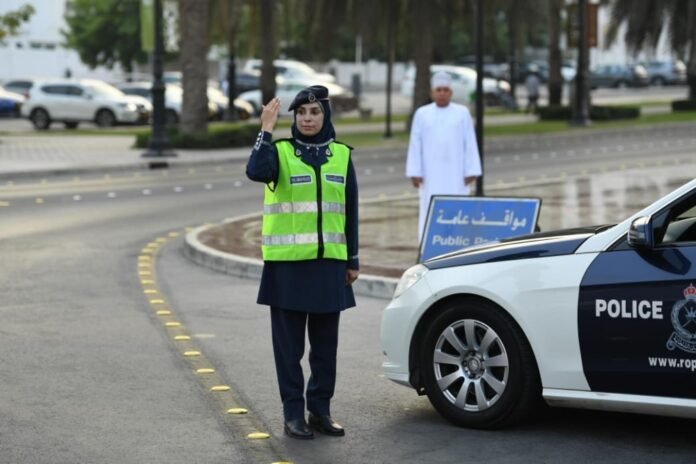
The Gulf Traffic Week awareness campaign has begun in Oman, focusing on improving pedestrian safety and reducing run-over accidents across the country. The initiative, now in its 38th edition, runs from May 2 to May 7 under the slogan “Cross Safely.” It brings together government bodies, private sector partners, and community institutions.
The Royal Oman Police leads the initiative through its traffic directorate. Officials aim to strengthen road safety culture and encourage responsible behavior among drivers and pedestrians. The campaign places strong attention on safe crossing habits, especially in high-traffic areas such as schools, markets, and main roads.
Ali bin Salim Al Falahi, Director General of Traffic at the Royal Oman Police, said the initiative highlights shared responsibility on the road. He noted that the Gulf Traffic Week awareness campaign promotes respect for traffic signals and proper use of pedestrian crossings. He also stressed that protecting lives remains the main goal of all awareness activities.
Al Falahi explained that the campaign includes multiple public engagement programs. These include exhibitions in shopping centers across different governorates. Schools and universities also host lectures and training sessions. In addition, media programs on radio and television help spread safety messages to a wider audience.
He added that this year’s campaign focuses strongly on pedestrian protection. Authorities want to reduce accidents involving pedestrians, especially in crowded urban areas. The Gulf Traffic Week awareness campaign also includes a seminar that brings together experts and stakeholders to discuss safety solutions and prevention strategies.
Al Falahi pointed out that Oman has seen improvements in traffic safety in recent years. He credited this progress to continuous efforts by law enforcement and better public awareness. According to him, technology also plays a growing role in monitoring roads and detecting violations.
He noted that modern systems, including artificial intelligence, support traffic management. These tools help authorities respond faster and reduce risky driving behavior. He added that training programs now include virtual simulations to teach safe driving in realistic conditions.
The campaign also targets younger generations. Al Falahi emphasized the importance of parents and schools in teaching children safe road behavior. He highlighted lessons on crossing streets, cycling safety, and correct use of school transport. Cooperation with the Ministry of Education supports these efforts through programs like “Friends of the Road.”
Organizers believe the Gulf Traffic Week awareness campaign helps build long-term behavioral change. They see education and community involvement as key tools for reducing accidents. Officials also stress that road safety requires commitment from everyone, not only authorities.
The Royal Oman Police continues to expand awareness programs throughout the year. Through these initiatives, they aim to strengthen discipline on the roads and reduce traffic-related risks. The campaign reinforces the message that safe driving habits protect both individuals and society.
