
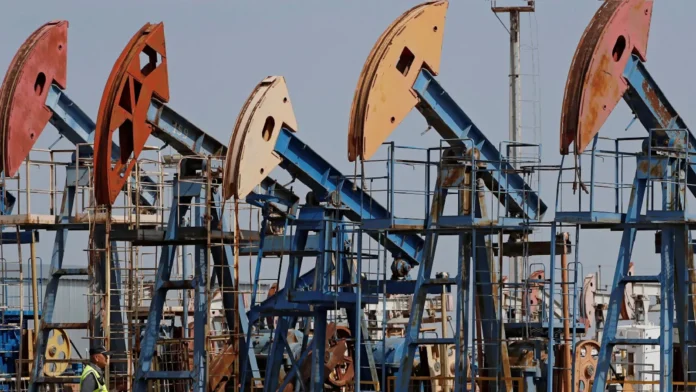
Oil prices rise on supply risks and Fed cut expectations, keeping global markets under close watch this week. Analysts note that energy traders remain highly sensitive to geopolitical developments and monetary policy signals.
On Tuesday, Brent crude gained 15 cents, reaching $67.59 per barrel. At the same time, U.S. West Texas Intermediate rose 15 cents to $63.45. One day earlier, Brent closed at $67.44 while WTI ended at $63.30.
Ukraine has recently intensified drone strikes on Russian refineries. These attacks target Moscow’s energy infrastructure to weaken its wartime capacity. As a result, global traders closely monitor any potential impact on exports.
Experts highlight that Russia contributes more than 10% of worldwide oil production. Therefore, any disruption fuels concerns about supply shortages. Consequently, oil prices rise on supply risks and Fed cut expectations, creating strong momentum across markets.
In addition, Washington made new remarks on trade measures. U.S. Treasury officials stated that tariffs on Chinese goods will not increase unless Europe acts jointly. The strategy aims to reduce Chinese and Indian purchases of Russian crude.
Analysts from JP Morgan stressed another important detail. They argued that attacks on export terminals like Primorsk directly limit Russia’s foreign sales. Moreover, they warned that such strikes reflect growing willingness to disrupt global oil flows.
Meanwhile, investors are preparing for the Federal Reserve’s upcoming meeting on September 16-17. Market consensus points to a likely rate cut. With cheaper credit, fuel demand could increase, pushing prices even higher.
Furthermore, a weaker U.S. dollar supported recent moves. The dollar index fell to a one-week low, making oil cheaper for foreign buyers. Currency dynamics, therefore, added another reason why oil prices rise on supply risks and Fed cut expectations.
Traders are also awaiting U.S. crude inventory data due Wednesday. Forecasts suggest a 6.4 million barrel decline for the week ending September 12. This would follow the prior week’s 3.9 million barrel build.
Analysts expect gasoline and crude stockpiles to shrink, though distillate inventories may rise. The final figures could offer further clues on demand trends.
Overall, markets face a unique mix of risks. Geopolitical conflicts, economic policies, and inventory changes all shape the near-term direction of oil.
