
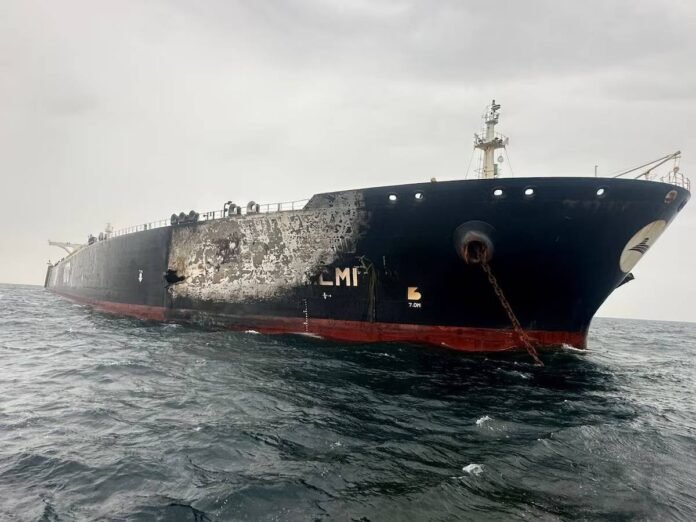
The Kuwaiti tanker attack off Dubai raised serious regional security concerns early this week. Authorities acted immediately to control the fire and prevent environmental damage. Moreover, the incident highlighted the growing risks to maritime energy transport in the Gulf.
Kuwait Petroleum Corporation confirmed that the fully loaded crude oil tanker Al-Salmi caught fire after a direct Iranian assault while anchored off Dubai. The fire was extinguished by 4:26 am, with no injuries reported among the 24 crew members. Importantly, no oil spill or marine pollution occurred, averting a potential environmental disaster.
Kuwait Oil Tanker Company praised the crew for following emergency protocols, activating fire suppression systems and isolating the affected tank. Their swift action, coordinated with UAE authorities, prevented the fire from spreading. Technical assessments are ongoing to determine the extent of hull and tank damage.
Dubai emergency services also confirmed successful management of the incident without injuries or environmental impact. The tanker carried two million barrels of oil, with Qingdao, China listed as its destination. This incident underscores the vulnerability of critical maritime energy routes in the region.
Meanwhile, Kuwait’s defense and security agencies reported active interception of multiple threats in recent days. Air defense systems targeted five hostile ballistic missiles and seven drones over Kuwaiti airspace. The National Guard neutralized two additional drones. Explosive ordnance disposal teams handled 10 reports of debris from interceptions, totaling 616 incidents since hostilities began.
Authorities also reminded residents that the deadline for surrendering unlicensed weapons, ammunition, and explosives expires at the end of business on April 1, 2026. Legal action will follow for noncompliance. In parallel, the national alert notification system was updated, synchronizing high-tone alerts with sirens and sending overnight notifications with lower tones.
Other government bodies continued essential operations despite recent attacks. The Ministry of Electricity, Water and Renewable Energy nearly completed repairs to damaged power lines, ensuring uninterrupted production. The Competition Protection Agency monitored markets to secure goods availability, while the Public Authority for Food and Nutrition intensified inspections, issuing violations and confiscating unfit products.
In addition, Kuwait’s Ministry of Youth and Sports formed a committee to evaluate resuming suspended sports activities safely. The Kuwait Olympic Committee confirmed weekly meetings to coordinate a cautious return.
The Kuwaiti tanker attack highlighted both the risks to vital maritime assets and the importance of rapid, coordinated responses by authorities. It underscores Kuwait’s focus on security, public safety, and continuity of essential services.
