
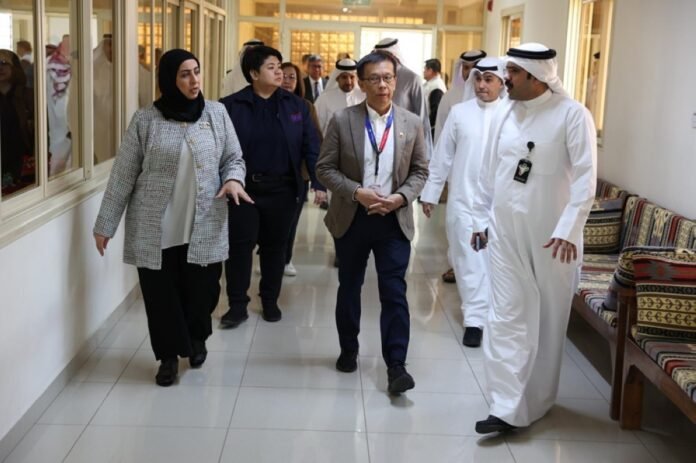
Kuwait showcased strong commitment to worker welfare as the Philippines Secretary visited a shelter, and protecting migrant workers remains the priority. The official praised the shelter for providing rehabilitation, legal aid, and social services to female expat workers. He emphasized that such centers are essential in supporting workers facing employer issues, ensuring safety, and promoting labor rights.
During the visit, the acting head of Kuwait’s Public Authority of Manpower provided a detailed overview of the services offered at the center. She highlighted how the shelter helps women overcome challenges and regain confidence to return to domestic work. Furthermore, she noted that rehabilitation programs include counseling, skills training, and legal guidance, which empower workers to reintegrate successfully.
The center, located in Jleeb Al-Shuyoukh, has operated since 2010 and supported thousands of female domestic helpers. Most beneficiaries come from countries such as the Philippines, India, and Sri Lanka. The facility offers temporary accommodation, legal assistance, and emotional support to help workers recover from workplace abuse or contractual disputes.
Officials explained that Kuwait hosts over 700,000 expat domestic helpers, with Filipinos forming a significant portion. The Philippines Secretary highlighted the importance of bilateral cooperation between the two countries to safeguard workers’ rights. He praised Kuwait for creating systems that address worker welfare and ensure humane treatment. These efforts reflect the nation’s commitment to protecting migrant workers while promoting fair labor standards.
The Secretary also acknowledged that past tensions had occurred between the Philippines and Kuwait over worker treatment. However, he noted that both countries worked together to resolve issues and ensure the safe return of Filipino employees. Today, recruitment has resumed, and preventive measures are in place to protect workers against exploitation.
He further stressed that ongoing collaboration is vital to maintain the trust and safety of migrant workers. Both governments continue to share best practices, improve shelters, and develop programs that strengthen worker protection. These initiatives demonstrate that proactive steps are necessary for sustainable labor relations and social justice.
By the end of the visit, officials reinforced that protecting migrant workers is a shared responsibility. They committed to continuous improvements in rehabilitation services, legal assistance, and social programs. The visit highlighted how practical measures, effective governance, and bilateral cooperation ensure a safer, fairer environment for thousands of expat domestic helpers in Kuwait.
