
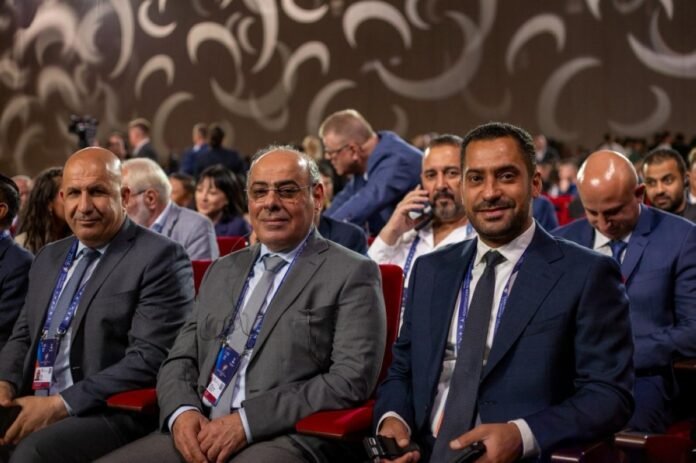
Kuwait is strengthening security cooperation with Russia through discussions focused on emergency response, civil protection, and advanced technologies. The discussions took place during an international security exhibition in Kazan, bringing together officials from several countries.
Major General Hamad Ahmad Al-Munaifi, Assistant Undersecretary for Public Security Affairs, represented Kuwait at the event. He attended alongside Brigadier Mansour Al-Hashash, Director General of the General Department of Civil Defense.
The officials participated in the 16th International Integrated Security Exhibition for security equipment in Kazan. Their participation reflects Kuwait’s efforts to expand international partnerships and exchange expertise in security and emergency management.
During the exhibition, the Kuwaiti delegation reviewed various technologies designed for civil protection and crisis response. The displays included specialised equipment, emergency vehicles, and technological systems used during challenging situations.
Al-Munaifi also attended the conference held alongside the exhibition, which featured specialised presentations and professional discussions. Participants examined methods for protecting critical infrastructure and improving preparedness for emergencies.
In addition, conference sessions addressed early warning systems and emergency response capabilities. These areas remain important for authorities seeking to improve their ability to detect threats and respond quickly.
On the sidelines of the event, Al-Munaifi met Roman Kurynin, Deputy Head of Russia’s Emergencies Ministry. The two officials discussed opportunities to expand cooperation between their respective emergency and security institutions.
Their discussions included professional training, technical knowledge exchange, and the development of specialised personnel. Both sides also considered how emerging technologies could improve security and rescue operations.
In particular, the officials examined applications involving robotics, unmanned aircraft, and artificial intelligence. These technologies increasingly support emergency teams during situations that require rapid assessment and specialised intervention.
Robotic systems can assist responders when dangerous environments create significant risks for human personnel. Similarly, unmanned aircraft can provide aerial information and help teams monitor large or difficult-to-access areas.
Artificial intelligence can also support emergency planning by processing information and helping authorities identify potential risks. Therefore, integrating these technologies could strengthen decision-making during complex security and rescue operations.
The Kuwaiti delegation also held discussions with Lebanese civil defense officials during the event. Al-Munaifi met Brigadier General Imad Kheirish, Director General of the Lebanese Civil Defense.
Their meeting focused on developing cooperation and sharing experience in civil defense and civil protection. The officials also discussed measures that could improve the efficiency of emergency response teams.
Such exchanges can help emergency organisations learn from different operational experiences and adopt effective international practices. Moreover, cooperation can strengthen preparedness for disasters, accidents, infrastructure incidents, and other emergencies.
Kuwait’s participation also gives its security authorities an opportunity to review developments taking place internationally. By examining new equipment and operational methods, officials can identify technologies that may support future improvements.
The focus on digital systems and advanced equipment reflects the changing nature of modern emergency management. Security agencies increasingly rely on technology to improve situational awareness, communication, response times, and operational coordination.
Security cooperation therefore remains an important part of Kuwait’s efforts to strengthen institutional readiness. International exchanges can provide access to specialised knowledge while creating opportunities for joint training and technical development.
The Ministry of Interior said the participation supports efforts to modernise its systems and improve operational preparedness. Authorities also aim to raise the efficiency of agencies responsible for security, emergencies, and civil protection.
Overall, the Kazan meetings highlighted Kuwait’s interest in developing stronger international partnerships in emergency and security operations. The discussions also underscored the growing role of robotics, drones, and artificial intelligence in protecting communities.
As technology continues to reshape emergency response, Kuwait is reviewing international practices that could strengthen its capabilities. The latest discussions demonstrate an ongoing effort to combine professional expertise with modern tools and improved preparedness.
