
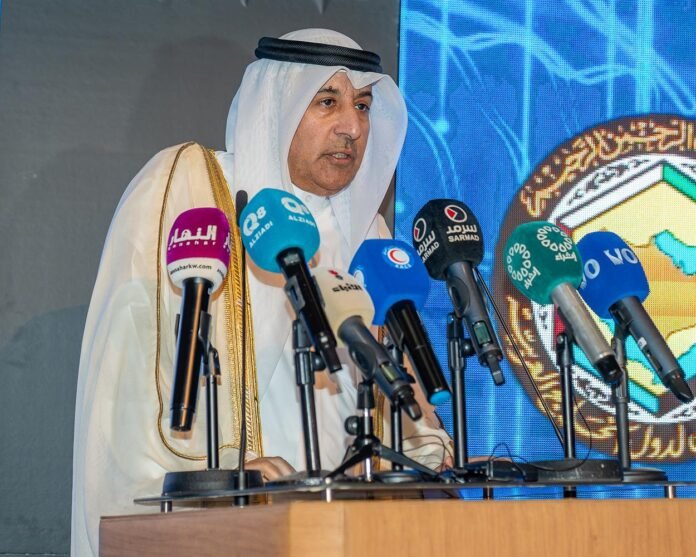
Kuwait hosted the Gulf Red Crescent First Conference on Artificial Intelligence on Wednesday, emphasizing the critical role of ethical AI in humanitarian work. The event gathered experts, humanitarian leaders, and innovators to explore how technology can support humanitarian missions without compromising human values.
Mamadou Sow, head of the ICRC delegation in Kuwait, warned that conflicts increasingly involve digital systems, and humanity must never disappear behind algorithms. He stressed that governments, militaries, and tech developers must ensure a human remains responsible for life-and-death decisions when AI is deployed in conflict. Sow said, “We must inject humanity in AI usage, especially in autonomous weapons systems.”
Assistant Foreign Minister for Consular Affairs Aziz Al-Daihani highlighted Kuwait’s commitment to using AI for humanitarian response and capacity building. He emphasized that the conference provided a crucial platform to share knowledge, adopt best practices, and strengthen regional cooperation. He added that investing in knowledge and innovation serves the wider goal of New Kuwait 2035.
The ICRC and Red Crescent showcased projects demonstrating AI’s potential to improve humanitarian outcomes. One initiative, Trace the Face, uses facial recognition to reunite families separated by war or migration. Sow also presented plans for a digital emblem to protect humanitarian organizations online, mirroring the physical Red Cross and Red Crescent emblems.
Kuwait Red Crescent Society Chairman Khaled Al-Maqamis noted that AI tools now strengthen data management, needs assessments, and relief operations. He said AI can forecast disasters, optimize aid distribution, and assist refugee family reunification while reinforcing core humanitarian values.
Jamal Al-Nouri, Chairman of the Abdullah Al-Nouri Charity Society, emphasized that digitization is essential for transparency, efficiency, and broader reach. He explained that AI enables organizations to anticipate needs, improve project evaluation, and enhance decision-making. Al-Nouri warned, however, that ethical considerations must guide every step of AI integration.
Conference participants agreed that technology cannot replace humanity. Sow concluded, “Artificial intelligence can make us faster, cybersecurity can make us safer, but only humanity ensures we act responsibly.” He reaffirmed that ethical AI in humanitarian work safeguards both lives and the dignity of affected communities.
By the end of the two-day event, Kuwait positioned itself as a regional leader in promoting ethical AI in humanitarian work, combining innovation with a firm commitment to humanitarian principles.
