
Kuwait security readiness intensified as authorities reported ongoing Iranian missile and drone attacks targeting the country. Officials sent letters to the United Nations Secretary-General and the Security Council to document the threats. Between February 28 and March 8, Kuwaiti defenses intercepted most of the 234 missiles and 422 drones launched toward the nation.
The strikes targeted both military and civilian sites, including Kuwait International Airport and the Public Institution for Social Security. Two border security personnel died during these attacks, raising the total number of fallen officers and military personnel to four. Officials emphasized that protecting the country’s sovereignty remains a top priority.
The National Guard shot down six drones across northern and southern sites. National Guard spokesman Brigadier Jadaan Fadel Jadaan urged the public to follow safety instructions. He affirmed that the National Guard, in coordination with the army, police, and Kuwait Fire Force, stays prepared to confront any threats.
Defense Ministry spokesman Colonel Saud Al-Atwan said armed forces engaged a wave of hostile aerial targets on Monday. Two ballistic missiles in the south were detected and destroyed along with one hostile drone. Explosions heard in some areas resulted from interception operations. Authorities reminded the public to comply with safety measures while the armed forces safeguard the nation.
Minister of Defense Abdullah Al-Salem visited the families of two fallen officers to offer condolences. He also praised their sacrifices as the highest form of loyalty, leaving a lasting source of national pride. Prime Minister Ahmad Al-Abdullah inspected Sabah Al-Salem University City to ensure continuity of education and protect students and staff.
Authorities also reviewed logistics and operational readiness. Defense officials inspected supply warehouses, while the Interior Ministry checked mosques for security ahead of the last ten days of Ramadan. Kuwait Municipality cleared streets and removed obstacles near major mosques.
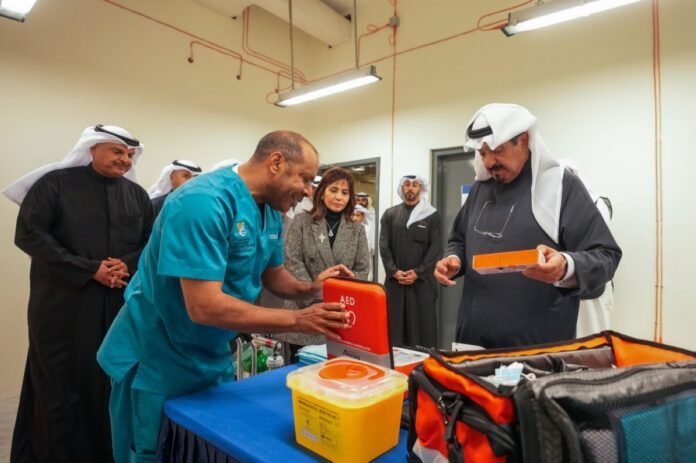
The Fire Force inspected hospitals and other critical facilities to guarantee safety and readiness. Several ministries temporarily suspended in-person services while continuing electronic services to maintain public safety. Commerce authorities inspected markets to ensure price stability and enforce consumer protection regulations.
Kuwait security readiness also includes emergency communication systems. The National Bureau for Academic Accreditation launched the “Istalam” WhatsApp channel to provide students, parents, and institutions with timely information about academic programs.
Kuwait security readiness highlights the nation’s coordinated approach across government agencies, humanitarian institutions, and emergency services to protect citizens, maintain stability, and respond effectively to ongoing threats.
