
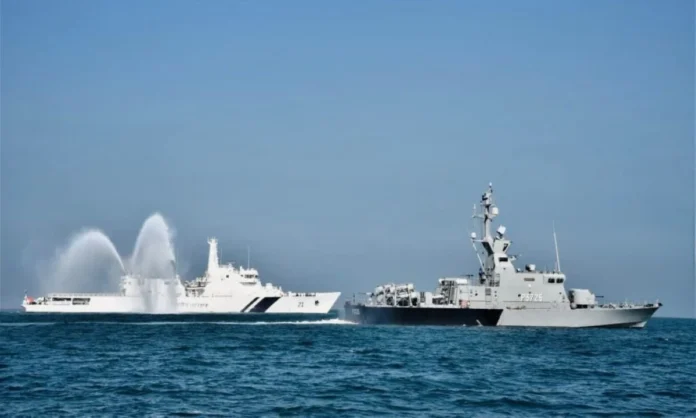
Kuwait and India carried out a joint naval exercise in regional waters this week. The drill reflected growing defense ties between both countries. From the start, the exercise emphasized maritime security cooperation as a shared priority. The Kuwaiti Navy patrol boat Garoh joined the Indian Navy ship Sarthak during the operation. Moreover, the drill focused on readiness and coordination at sea.
The exercise centered on firefighting procedures and logistical asset protection. These scenarios tested response speed and coordination. Additionally, the drill strengthened communication between the two naval units. As a result, both sides improved operational confidence. The training also reflected practical cooperation in real maritime conditions.
According to a military statement, the drill formed part of ongoing security efforts. Kuwait continues to enhance maritime defense capabilities. At the same time, India expands regional naval engagement. Therefore, the exercise supported shared security goals. It also reinforced trust between both naval forces.
Furthermore, the drill aimed to improve operational readiness. Crews practiced coordinated movement and emergency response. They also exchanged technical knowledge during the exercise. Consequently, the training enhanced professional skills. These efforts support safer maritime operations across the region.
In addition, the exercise highlighted the importance of protecting logistical assets. Modern maritime threats often target supply lines. For this reason, both navies focused on asset defense. This approach strengthens preparedness during emergencies. It also improves resilience during regional challenges.
The drill also reflected commitment to freedom of navigation. Secure sea lanes support global trade and energy flows. Therefore, both countries prioritize maritime stability. Through maritime security cooperation, they contribute to regional balance. This cooperation benefits commercial and strategic interests alike.
Moreover, the exercise demonstrated Kuwait’s expanding defense partnerships. Kuwait regularly conducts drills with international allies. These activities support long-term defense planning. Meanwhile, India continues to strengthen its naval presence. Together, they promote responsible maritime engagement.
The training also supported broader regional stability goals. Maritime cooperation reduces risks of miscalculation. It also builds transparency between partners. As a result, joint drills contribute to confidence building. They also encourage peaceful maritime conduct.
Additionally, naval cooperation supports disaster response readiness. Firefighting drills prepare crews for emergencies at sea. They also enhance coordination during rescue operations. Therefore, the exercise carried humanitarian value as well. It reinforced shared responsibility for maritime safety.
Observers noted the smooth coordination between the two vessels. Crews executed drills with discipline and precision. Communication remained clear throughout the exercise. Consequently, the drill achieved its operational objectives. It also strengthened professional relationships.
Overall, the joint exercise marked another step in bilateral defense ties. It showcased practical collaboration at sea. More importantly, it reinforced maritime security cooperation as a long-term goal. Both countries continue to invest in naval readiness. These efforts support stability, safety, and cooperation across regional waters.
