
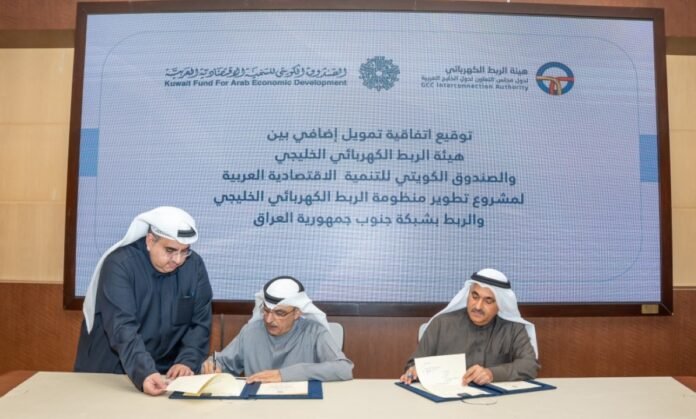
Kuwait’s Kuwait Fund for Arab Economic Development (KFAED) strengthened regional energy through a KFAED loan for GCC interconnection. The agreement, worth KD 8 million, will finance projects enhancing the GCC electrical system and linking it to southern Iraq. This move shows Kuwait’s commitment to energy security and regional cooperation.
The KFAED loan for GCC interconnection marks the third additional contribution to the project. The fund continues to support strategic initiatives. The project aims to strengthen electricity security and increase efficiency in Kuwait’s national grid. Consequently, it ensures growing demand, especially during peak periods, is met effectively.
Moreover, the project includes constructing a new interconnection station, Al-Wafra Station, in Kuwait’s GCC Interconnection System. The station spans 62,000 square meters and boosts operational capacity. Additionally, about 255 kilometers of 400 kV double-circuit overhead transmission lines will connect Al-Wafra Station to Saudi Arabia’s Al-Fadhili substation. These upgrades improve technical and economic performance of Kuwait’s electricity network.
Furthermore, the project benefits neighboring countries. Southern Iraq will receive at least 500 MW of stable electricity. This improves Iraq’s network performance and strengthens Gulf energy cooperation. The project also supports several United Nations Sustainable Development Goals. These include clean energy, economic growth, quality education, health, and resilient infrastructure.
The KFAED loan for GCC interconnection brings the total Kuwaiti contribution to KD 78 million, about 29 percent of the project cost. The Kuwait government adds around KD 37.5 million. These contributions highlight KFAED’s role in supporting infrastructure, securing energy, and promoting Gulf collaboration.
In conclusion, the KFAED loan for GCC interconnection shows Kuwait’s leadership in regional energy. By linking grids, supporting sustainable development, and improving reliability, the project ensures long-term benefits for Kuwait and the Gulf region.
