
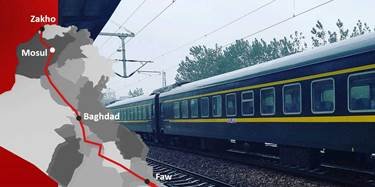
Talks continue between Erbil and Baghdad over the future of a major national infrastructure plan. From the outset, Kurdistan’s role in Iraq’s Development Road has shaped discussions about trade access, economic balance, and regional integration. Moreover, officials remain optimistic despite the absence of a final agreement.
Discussions focus on whether the Kurdistan Region will receive meaningful inclusion in the Development Road Project. Advisors involved in the talks confirmed that negotiations remain active. However, they acknowledged that political and technical gaps still delay consensus.
The Development Road Project represents one of Iraq’s largest infrastructure investments. The project aims to stretch nearly 1,200 kilometers from southern Basra to the Turkish border. Consequently, officials describe it as a strategic trade corridor linking Iraq to global markets.
The $17 billion initiative combines railway and highway networks to boost regional connectivity. Authorities expect the project to generate roughly $4 billion in annual revenue. In addition, planners aim to complete the first phase by 2028.
Project maps released in 2024 raised concerns in Erbil. According to those plans, only 12 kilometers would pass through Kurdistan Region territory. Meanwhile, more than 300 kilometers would cross neighboring Nineveh province.
This limited route sparked concern among Kurdistan officials. They argue that the design sidelines the Region economically. Therefore, leaders warned that centralized routes could weaken regional trade authority.
Kurdistan officials formally proposed an alternative route during meetings in Baghdad last year. They described those talks as constructive. However, the discussions did not deliver a binding agreement.
Regional leaders stressed that the Development Road cannot function effectively without passing through Kurdistan. They emphasized geography as a critical factor. Specifically, they argued that access to Turkey requires meaningful regional inclusion.
Meanwhile, federal authorities maintained that the project remains a national initiative. Officials reiterated that Baghdad would oversee planning and implementation. As a result, tensions persisted between federal and regional priorities.
Despite political disagreements, technical progress continued steadily. Transport officials confirmed that railway designs reached 87 percent completion. Similarly, highway designs advanced beyond 70 percent.
Authorities also finalized the project’s economic framework. Consulting experts developed a comprehensive strategy covering governance and investment planning. Consequently, officials adopted the model to attract international partners.
The transport ministry stated that the project aims to transform Iraq’s economic structure. Leaders want to reduce dependence on oil revenues. Therefore, the initiative supports broader diversification goals.
Officials expect the Development Road to create thousands of jobs. Estimates suggest 100,000 direct positions and more than one million indirect opportunities. As a result, employment growth remains a central selling point.
Earlier this month, officials confirmed progress on preliminary implementation stages. They stated that initial milestones would open the tendering process. Accordingly, international companies may soon participate.
Nevertheless, Kurdistan’s role in Iraq’s Development Road remains unresolved. Regional leaders continue pushing for greater inclusion. At the same time, Baghdad emphasizes national coordination.
Observers say the final outcome will shape future federal relations. They also warn that exclusion risks long-term economic imbalance. Ultimately, Kurdistan’s role in Iraq’s Development Road will influence trade, stability, and regional cooperation.
