
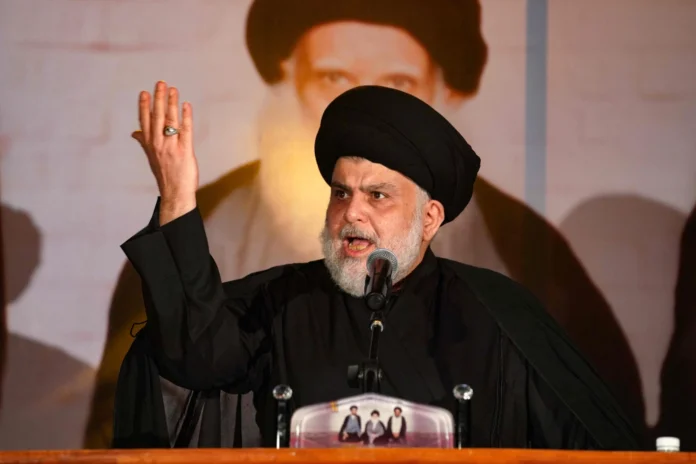
Muqtada al-Sadr has once again emphasized the growing influence of al-Sadr’s political movement ahead of Iraq’s upcoming parliamentary elections. The leader of the Patriotic Shiite Movement (PSM) urged his supporters not to vote for any candidate or bloc, signaling potential disruption in voter turnout.
In a handwritten statement shared on social media under the hashtag #Boycotters, al-Sadr announced he will not participate in the elections. He described the current political system as corrupt and dominated by favoritism, calling on Iraqis to reject it entirely. The announcement underscores the growing influence of al-Sadr’s political movement across the country.
A source close to al-Sadr told Shafaq News that he is not aiming to topple the government. Instead, he seeks deep reforms and a political process free from sectarian quotas and corruption. His call highlights a continuing push for meaningful change in Iraq’s political system.
Iraq’s parliamentary elections are scheduled for November 11, with special voting on November 9 for members of the security forces and other designated groups. According to the Independent High Electoral Commission (IHEC), 21.4 million Iraqis are eligible to vote. The elections will test the ability of Iraqis to engage in a democratic process under significant political pressure.
Meanwhile, political analysts warn that al-Sadr’s boycott could influence voter behavior. They note that his movement commands a substantial support base, and widespread abstention could alter election outcomes. This situation highlights the growing influence of al-Sadr’s political movement and its impact on Iraq’s electoral landscape.
Security and political authorities have intensified preparations to ensure polling stations operate smoothly. Authorities also aim to maintain stability amid potential protests or demonstrations, reflecting the tense political climate in the country.
As Iraq approaches election day, the calls for reform, transparency, and accountability continue to dominate public debate. The upcoming elections may either reinforce Iraq’s democratic institutions or expose vulnerabilities in its political framework. Observers remain alert to shifts in voter behavior and the broader implications of al-Sadr’s boycott.
In conclusion, Iraq faces significant political uncertainty in the coming days. The growing influence of al-Sadr’s political movement remains central to the country’s electoral dynamics and could shape the future of Iraq’s governance and reform efforts.
