
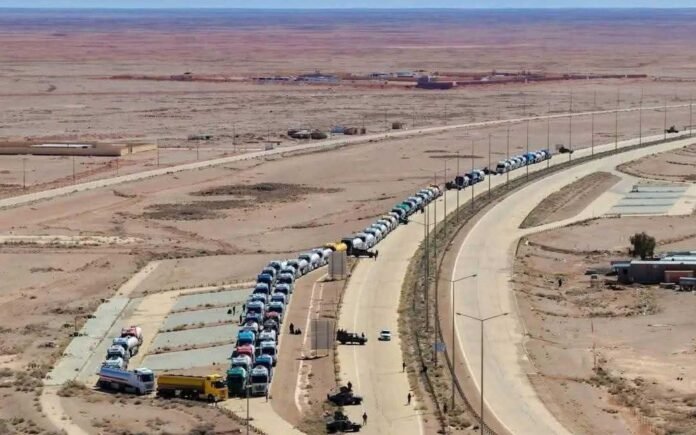
Iraq oil exports continue to grow as the country expands alternative transport routes through Syria. Officials in western Iraq confirm that hundreds of tanker trucks now move daily across the border. As a result, Iraq strengthens its energy export strategy despite regional challenges.
Emad Mashal, the mayor of Rutba, reported that between 500 and 700 tanker trucks cross daily. These shipments travel through the al-Waleed border crossing into Syria. Therefore, Iraq uses this route to maintain steady export flows.
Iraq oil exports now rely more on overland transport due to maritime uncertainties. Authorities aim to reduce dependence on traditional sea routes. Consequently, Iraq explores flexible solutions to secure its energy revenues.
At the same time, officials reopened a long-unused border route after many years of closure. The crossing had remained inactive for decades due to regional conflict. However, recent developments made the route viable again for trade.
Iraqi authorities link this shift to disruptions in maritime shipping. They seek alternative export channels after tensions affected key sea passages. As a result, land transport becomes an important backup option.
Meanwhile, Iraq oil exports through Syria increase despite higher transportation costs. Officials accept these costs because they ensure continued market access. Therefore, the country prioritizes stability in export volumes over reduced expenses.
IInternational reports indicate that contracts support large-scale fuel shipments. Suppliers agreed to export hundreds of thousands of tons over several months. Moreover, price discounts help maintain competitiveness in global markets.
At the same time, energy officials report earlier declines in production from major southern oilfields. Output dropped significantly before recent regional stabilization efforts. Consequently, Iraq adjusts its export strategy to match production levels.
Iraq oil exports depend heavily on coordination between state agencies and traders. The State Organization for Marketing of Oil manages key export agreements. Therefore, structured planning supports consistent delivery schedules.
The reopening of the al-Waleed crossing marks a strategic shift. Authorities see it as a long-term solution for export diversification. As a result, Iraq reduces pressure on traditional shipping routes.
Iraq oil exports continue to adapt to regional and logistical challenges. The country expands overland trade routes while maintaining production stability. Therefore, Iraq strengthens its position in global energy markets through flexible export strategies.
