
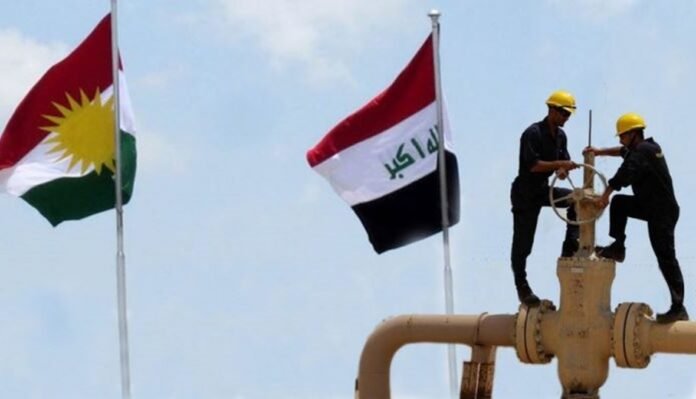
Baghdad and Ankara have reached a major agreement to restart Kurdistan oil exports after a two-year suspension. This deal signals a turning point in Iraq’s energy sector and promises financial relief for the Kurdistan Region.
Deputy Parliament Speaker Shakhwan Abdullah announced on Sunday that Iraq’s State Oil Marketing Organization (SOMO) signed agreements with Turkish companies. These agreements will enable the flow of Kurdish oil through established export routes. At the same time, the Kurdistan Regional Government (KRG) finalized a revenue-sharing arrangement with Baghdad. This covers both oil and non-oil income.
Abdullah emphasized the need for the Iraqi government to meet its legal and moral obligations. He called for the immediate release of overdue salaries for Kurdish public sector employees for July and August. These payments have been withheld since May 2025, contributing to a deep financial crisis in the region.
In addition, KDP lawmaker Mahma Khalil revealed that a Kurdish delegation plans to travel to Baghdad soon. Their mission is to complete technical procedures for exporting oil via the Ceyhan pipeline. This step is crucial to ensure a smooth and efficient restart of Kurdistan oil exports.
Kurdistan Region Prime Minister Masrour Barzani has repeatedly stated that Erbil supports the resumption of exports. SOMO Director Ali Nizar confirmed that the final decision rests with the producing companies. Nevertheless, he assured that SOMO is ready to market Kurdish oil as soon as negotiations conclude.
Economists warn that the prolonged halt in exports has cost Iraq nearly $11.16 million every day. The suspension has also left thousands of public workers unpaid for months. Recently, the KRG Finance Ministry submitted the August payroll to Baghdad for funding. The federal cabinet approved June salaries on the condition that Erbil transfers 120 billion dinars (around $92 million) from non-oil revenues.
Overall, this new agreement marks a critical step toward stabilizing the Kurdistan Region’s finances. Analysts predict that restarting Kurdistan oil exports could restore confidence in Iraq’s energy markets. Meanwhile, workers and local communities hope the flow of funds will resume promptly.
The restart of exports also underscores Baghdad and Ankara’s commitment to regional cooperation. Both sides view this as a strategic and economic win. Observers expect that the renewed oil flows will boost Iraq’s economy and strengthen ties between the federal and regional governments.
