
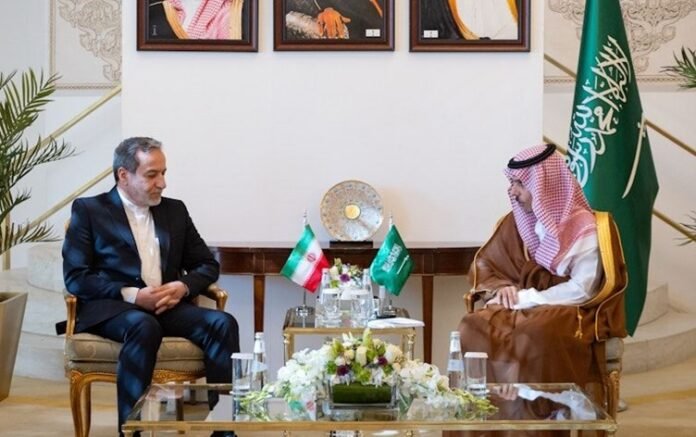
In a major move for regional de-escalation, Iranian Foreign Minister Abbas Araghchi spoke by phone with Saudi counterpart Faisal bin Farhan. This marked the first direct contact since the Middle East war erupted in February. Both sides discussed ways to reduce tensions and enhance security across the region.
The phone call represents a significant attempt at regional de-escalation, following weeks of missile and drone strikes targeting Gulf states and Israel. Araghchi and bin Farhan focused on restoring stability and protecting critical energy infrastructure.
Earlier, the United States and Israel launched a joint operation called Epic Fury against Iran. CENTCOM reported more than 13,000 targets struck, aiming to curb Tehran’s power projection. Iran retaliated with thousands of strikes across the Middle East, particularly targeting U.S. assets and Gulf energy sites.
Saudi Arabia reported intercepting nine drones and five ballistic missiles on Wednesday. These attacks targeted the Eastern Province, home to the Kingdom’s main oil production, including nearly 80% of daily output and most proven reserves. The province also hosts Saudi Aramco headquarters and major operations of international energy firms like SLB and Halliburton.
Since the war’s outbreak, Saudi defenses have intercepted 188 ballistic missiles and 477 drones. Of these, 110 drones and 75 missiles specifically threatened the Eastern Province. The region remains central to global energy security, making regional de-escalation a top priority.
Analysts suggest this phone engagement could signal a gradual return to diplomacy between Riyadh and Tehran. Both foreign ministries highlighted the need for urgent measures to prevent further escalation.
The U.S.-brokered two-week ceasefire aims to create space for dialogue, and the Saudi-Iran call may serve as the first building block for broader peace initiatives. Observers emphasize that continued communication will be key to protecting both regional stability and international energy markets.
