
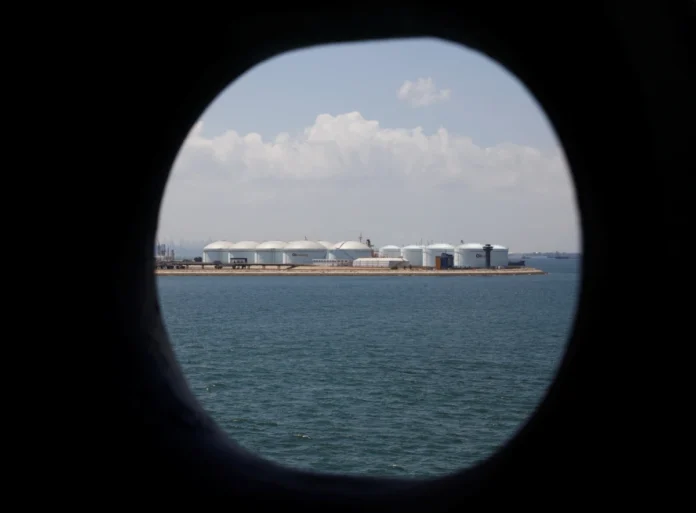
Gulf states are increasingly looking beyond their borders to strengthen energy security, with overseas oil storage offering protection against supply disruptions and greater access to international markets.
For decades, Gulf governments have pursued economic diversification to reduce their reliance on oil and gas revenues. Since the late 1960s and early 1970s, national strategies have prioritised industrial development, infrastructure and investment in non-oil sectors.
However, economic security now involves more than diversifying government income. It also requires securing essential resources, maintaining reliable supply routes and ensuring access to international customers during regional crises.
Hydrocarbons remain central to Gulf economies despite these long-running diversification efforts. In 2024, oil generated approximately 64 percent of total GCC government revenues, reaching $422 billion. Meanwhile, non-oil sources contributed around $237 billion.
Consequently, disruptions to production or exports can affect government budgets, public investment and wider economic stability. Protecting energy supplies and maintaining access to overseas markets have therefore become increasingly important priorities.
Overseas Oil Storage offers one way to address these vulnerabilities. By positioning reserves in strategic international locations, Gulf producers can improve their ability to reach customers when traditional shipping routes face disruption.
The 2026 disruption to the Strait of Hormuz reinforced the importance of this approach. The crisis affected nearly 30 percent of global oil supplies and 20 percent of liquefied natural gas exports.
Brent crude prices climbed above $100 per barrel, while European gas prices increased by approximately 60 percent. Additionally, the International Monetary Fund reduced its 2026 global growth forecast by 0.2 percentage points to 3.1 percent.
These developments demonstrated how disruption to Gulf energy exports can affect economies far beyond the region. Higher energy costs can increase inflation, interrupt trade and weaken industrial production.
The crisis also exposed differences in how Gulf producers can transport their exports. Saudi Arabia and the United Arab Emirates have pipelines that provide alternatives to the Strait of Hormuz.
Saudi Arabia operates its East-West pipeline, which connects eastern production areas with Yanbu on the Red Sea. Its stated capacity reaches approximately seven million barrels per day.
Similarly, the UAE operates the Habshan–Fujairah pipeline, which connects production facilities with the Gulf of Oman. Its capacity stands at approximately 1.5 to 1.8 million barrels per day.
However, Kuwait, Qatar and Bahrain lack comparable alternatives for bypassing the strait. Even existing pipeline routes cannot replace every shipment, and their infrastructure remains exposed to regional security threats.
During the first month of disruption, producers relying on Hormuz experienced shipment declines exceeding one-third. Their export revenues also fell by an estimated $15.2 billion.
The crisis highlighted four important weaknesses in the region’s energy security arrangements. First, alternative pipelines cannot fully protect exports when capacity remains limited or infrastructure faces threats.
Second, financial reserves cannot solve every problem. Sovereign wealth and fiscal buffers can help governments manage revenue losses, but they cannot guarantee access to customers.
Third, prolonged supply interruptions could encourage Asian buyers to seek alternative suppliers. Over time, this could weaken Gulf producers’ market share and long-standing commercial relationships.
Finally, the Strait of Hormuz carries essential imports into Gulf countries, including food and industrial materials. Disruptions can therefore threaten food security and manufacturing alongside energy exports.
Together, these challenges are encouraging Gulf governments to reconsider how they manage strategic reserves and international supply networks. Overseas Oil Storage can support that effort by connecting reserve management with trading, logistics and distribution opportunities.
Ultimately, storing resources abroad does not eliminate regional risks or replace domestic infrastructure. Instead, it adds another layer of protection and gives Gulf producers greater flexibility when established export routes face disruption.