
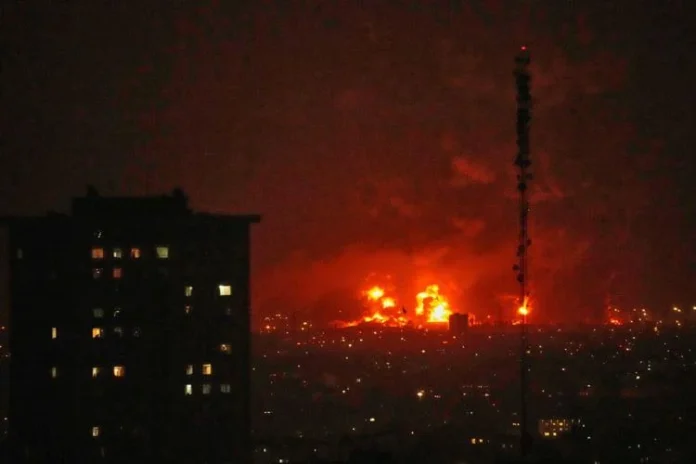
A new Gulf security alert has emerged as Iran launched drone and missile attacks on multiple Gulf countries. The assaults targeted critical infrastructure, including fuel tanks, residential areas, and oil facilities, heightening regional tensions. Consequently, governments in Bahrain, Saudi Arabia, Kuwait, and the UAE quickly activated emergency protocols to protect civilians and energy resources.
Bahrain reported strikes on fuel tanks in Muharraq Governorate and instructed residents to stay indoors and close windows. The country hosts the US Navy’s Fifth Fleet and has faced repeated targeting amid the ongoing US-Israel war on Tehran. In response, Bahraini authorities mobilized security teams and coordinated closely with civil defense units to limit damage.
In Saudi Arabia, the Ministry of Defense confirmed that air defenses intercepted drones heading toward the Shaybah oil field and the embassy district in Riyadh. Earlier, authorities destroyed seven drones aimed at the eastern region, demonstrating the kingdom’s strong defensive capabilities. Officials emphasized that protecting energy infrastructure and key sites remains a top priority.
Kuwait also faced drone attacks, resulting in two minor injuries and damage to a residential building. Debris from intercepted drones disrupted six power transmission lines, but electricity and water services remained stable. Additionally, Kuwait’s Civil Aviation reported material damage at its international airport while ensuring passenger safety.
Meanwhile, the UAE responded to missile threats, with explosions reported in downtown Dubai and smoke rising over residential neighborhoods. Maritime Trade Operations in the UK confirmed an attack on a container ship near Jebel Ali, highlighting the broader impact on shipping and energy logistics. Jordan also activated sirens nationwide to alert citizens of potential threats.
The attacks have already claimed thousands of lives and disrupted global energy markets. Brent crude surged past $100 per barrel, a 38 percent increase since the conflict began, prompting plans for strategic oil reserve releases to ease fuel shocks.
This Gulf security alert underscores the vulnerability of critical infrastructure in the region. Governments are coordinating closely, reinforcing air defenses, and sharing intelligence to mitigate risks. Regional stability depends on rapid responses and sustained cooperation among Gulf nations.
Overall, the Gulf security alert demonstrates the urgent need for vigilance, preparedness, and unified action against hostile regional threats. Authorities continue monitoring, securing borders, and safeguarding civilians and essential infrastructure.
