
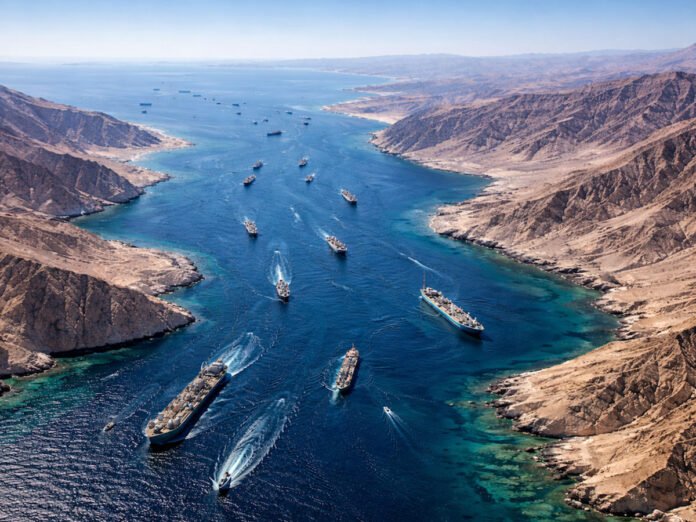
Gulf economic security is gaining urgent attention as recent disruptions reshape global trade patterns. As a result, Gulf countries now face growing pressure to rethink supply chain strategies. Moreover, experts say the region can turn shocks into long-term strength.
Global supply chains have started to recover after a temporary truce in the Iran conflict. However, uncertainty still affects investor confidence and shipping stability. In particular, the Strait of Hormuz remains a key concern for global markets. Oil and gas prices reacted quickly to the easing tensions. Shipping costs also dropped slightly in response. Nevertheless, analysts warn that this improvement may not last without lasting stability. Therefore, companies continue to monitor risks closely.
At the same time, experts highlight that supply chain recovery takes time. Once disruptions occur, systems cannot return to normal immediately. Consequently, delays and price fluctuations may continue in the short term. Because of these challenges, many global firms now rethink their logistics strategies. Instead of relying on one route, they diversify supply chains. This shift helps reduce risks and improves long-term resilience.
Meanwhile, Gulf economic security has become a central focus for regional policymakers. Experts believe recent shocks will push countries toward stronger internal systems. In addition, governments may prioritize stability over rapid expansion. Data shows a sharp decline in energy flows during the crisis. Oil shipments dropped significantly, while gas exports also fell. These changes highlight the vulnerability of key trade routes. Therefore, experts urge immediate strategic adjustments.
One major solution involves building local production capacity. Gulf countries currently depend on imported raw materials. However, leaders now see the value of domestic manufacturing. This approach can reduce reliance on unstable routes. In addition, experts recommend creating strategic reserves. Businesses can store essential goods for several months. As a result, they can manage disruptions without major losses. This strategy supports both stability and growth.
Furthermore, rising global inflation adds pressure to the situation. Economic uncertainty continues to affect markets worldwide. Consequently, Gulf countries must prepare for slower growth and higher costs. Despite these risks, the region still holds strong economic potential. Earlier forecasts predicted solid growth driven by non-oil sectors. However, recent events have complicated that outlook. Even so, opportunities remain for those who adapt quickly.
Sovereign wealth funds also play a crucial role in this transition. These funds support local economies during instability. At the same time, they invest in global sectors like technology and infrastructure. This dual approach strengthens long-term resilience. Looking ahead, experts expect Gulf countries to adopt balanced economic strategies. They will likely maintain ties with both Eastern and Western partners. In particular, Asian markets will remain vital for energy exports and trade.
Gulf economic security depends on flexibility and smart planning. Countries that adapt quickly will gain a competitive advantage. Therefore, this moment may define the region’s economic future for years to come.
