
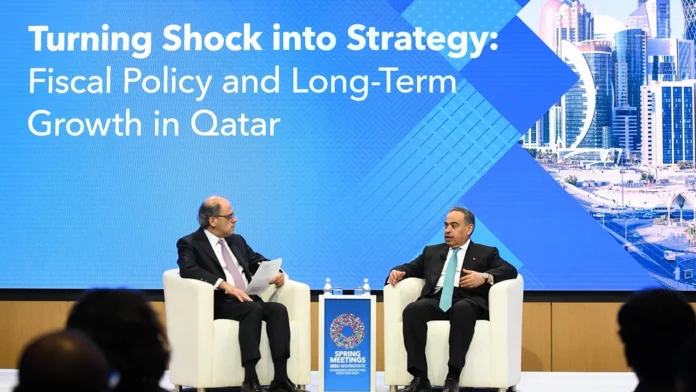
A Hormuz energy shock warning emerged as Qatar cautioned that global markets face worsening disruption if tensions around the Strait of Hormuz continue. Moreover, Qatar’s finance minister said the world has only seen the early stage of a much deeper crisis. As a result, he warned that economic pressure could intensify in the coming months.
Speaking at the IMF Spring Meetings in Washington, Finance Minister Ali bin Ahmed Al Kuwari stressed that the situation could escalate quickly. Additionally, he said rising energy costs represent only the beginning. Therefore, he warned that shortages could replace price volatility if instability continues.
A Hormuz energy shock warning gained urgency as he explained that the crisis could affect global supply chains. He noted that energy availability may soon become a major issue. Meanwhile, even countries with strong purchasing power could struggle to secure supplies.
He also highlighted the strategic importance of the strait. Around one-fifth of global energy flows through the route. Furthermore, disruptions already affect shipping operations and global trade confidence.
In addition, the minister pointed to wider risks beyond oil and gas. Fertiliser trade, semiconductor production, and healthcare supply chains all depend on stable flows. Consequently, he warned that disruptions could trigger a broader economic slowdown.
A Hormuz energy shock warning also included concerns about food security. Since a large share of fertiliser passes through the strait, agricultural output could face pressure. Therefore, analysts fear potential ripple effects on global food markets.
Qatar also reported impacts on its own energy infrastructure. Officials said damage at key facilities reduced export capacity significantly. Meanwhile, repairs could take years, adding long-term pressure on supply stability.
Despite global risks, the finance minister maintained a cautious domestic outlook. He said Qatar holds strong financial buffers and emergency funds. In addition, he confirmed that authorities can support key sectors during disruptions.
He repeated that the worst impact has not yet arrived. Therefore, he urged caution and preparedness among global partners. He also stressed that stability in the strait remains essential for global recovery.
International institutions also echoed similar concerns. They warned that prolonged disruption could push the global economy toward recession. Moreover, inflation and financial tightening could worsen under sustained pressure.
The Hormuz energy shock warning reflects growing concern over global economic stability. As tensions continue, Qatar signaled that the full impact may still lie ahead.
